What Are the Top Renewable Energy Sources?

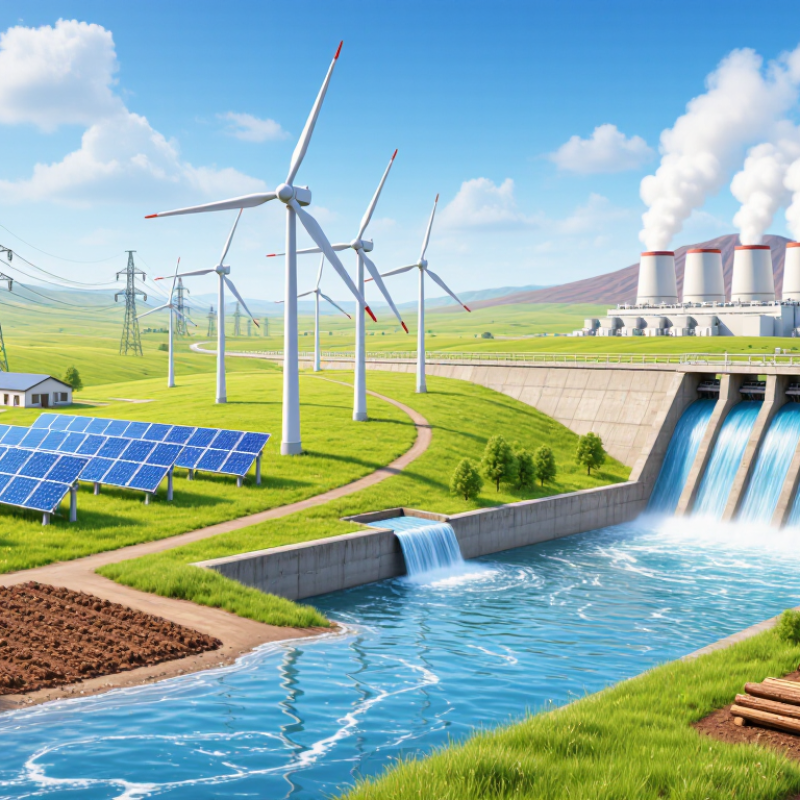
Renewable Energy Sources are systems that draw on naturally replenished flows, such as sunlight, wind, and moving water. Their supply is not equally steady everywhere. A rooftop solar array can produce strongly on a clear afternoon, then little after sunset. Wind turbines depend on local wind patterns, while hydropower relies on river conditions and reservoir management. The details matter.

This article examines the leading options: solar, wind, hydropower, geothermal energy, and biomass. It will consider how each source generates electricity or heat, where it tends to work well, and what limits its use. Geothermal plants can provide steady power in suitable regions, but drilling costs and geology shape their reach. Biomass can use crop residues or wood waste, yet its climate impact depends on what is burned and how it is replaced. Not every renewable option is automatically low-impact.

Readers will also see why storage, transmission lines, land use, and local weather affect the energy mix. Batteries can shift some solar power into evening hours, but they do not solve every grid challenge. There is no single winner for every community. Comparisons also depend on whether we measure cost, reliability, emissions, or land footprint. Those measures can point in different directions. The aim is a practical overview, not a claim that clean energy choices are simple or perfect.
What Are the Top Renewable Energy Sources?

Renewable Energy: Definition and Main Categories

Renewable energy comes from sources that replenish naturally on a human timescale. Sunlight, moving air, flowing water, underground heat, and organic material all qualify. “Renewable” does not mean impact-free. A solar farm needs land and materials; a dam can alter river habitats. The category describes how a resource is renewed, not whether every project is harmless. That distinction is easy to miss.

The main categories include solar, wind, hydropower, geothermal, and bioenergy. Solar panels convert sunlight into electricity, while solar thermal systems capture heat. Wind turbines use moving air, and hydropower generates electricity from flowing or falling water. Geothermal systems draw on heat beneath Earth’s surface. Bioenergy uses plant-based material or organic waste, though its climate benefits depend on how that material is sourced and processed. Some sources vary with weather. Others, like geothermal, can provide steadier output, but suitable locations are limited. The categories are useful, yet they can hide local trade-offs.

Tips: Check what resource a project uses, where it is located, and how reliably it produces energy. A windy coast and a shaded rooftop have different options. Look beyond the word “renewable” and ask about land, water, and wildlife effects. Even a simple comparison can reveal gaps in the label.

Top Renewable Energy Sources by Installed Capacity

Global installed renewable power capacity by technology at the end of 2023, in gigawatts (GW).

Hydropower and solar power had the largest installed capacities, followed by wind. Installed capacity measures the maximum potential output of power plants; it is not the same as the electricity they actually generate.
Source: International Renewable Energy Agency (IRENA), Renewable Capacity Statistics 2024.

Solar Energy: Turning Sunlight into Electricity and Heat

What Are the Top Renewable Energy Sources?

Solar Energy: Turning Sunlight into Electricity and Heat

Solar energy works in two main ways. Photovoltaic (PV) panels convert sunlight into electricity, while solar-thermal collectors capture heat for water or buildings. IRENA’s Renewable Capacity Statistics 2025 reports that solar power capacity grew by 451.9 gigawatts in 2024, accounting for nearly 78% of renewable capacity additions. That growth is striking, but it does not mean every roof is suitable. Shade from a chimney can cut output, even on a bright day.

Solar heat also contributes at a substantial scale. The IEA Solar Heat Worldwide 2024 report estimates that operating solar-thermal capacity reached about 544 gigawatts-thermal by the end of 2023, supplying roughly 442 terawatt-hours of heat that year. For a household, a solar water-heating system can reduce the need to heat water with other energy sources. Results depend on local sunlight, hot-water demand, and backup equipment. The details matter.

Tips: Check roof shade at different times of day, not just at noon. Compare estimated annual production with your electricity or hot-water use. I would not assume the sunniest-looking roof is automatically the best choice; seasonal shadows can be easy to miss.

Wind Energy: Generating Power from Moving Air

Wind energy turns moving air into electricity using turbines. As wind moves across the blades, the rotor spins a generator inside the nacelle. A tall tower helps the blades reach stronger, steadier air above nearby obstacles. On a breezy day, a turbine may rotate slowly at first, then speed up as conditions change.

The wind is uneven. Turbines produce less electricity when the air is still, so wind farms often connect to larger grids that balance power from different sources. Careful siting matters: engineers measure wind patterns over time and consider terrain, wildlife, nearby homes, and access for repairs. A turbine can look simple from a distance, but its bearings, blades, and electrical systems need regular inspection. Wind power has no fuel to burn during operation, though building and transporting equipment still require materials and energy. That trade-off is easy to underestimate. Even good forecasts cannot make the wind fully predictable, and that remains a practical challenge for planners.

Hydropower, Geothermal, and Biomass: Other Major Sources

Hydropower uses flowing or falling water to turn turbines. At a dam, stored water can be released when electricity demand rises, making generation flexible. Smaller run-of-river plants use a river’s current and may need less storage. The trade-off is real. Reservoirs can flood habitats, alter fish movement, and change sediment flows downstream. A river may look calm from the road while its ecosystem is under pressure.

Geothermal energy draws on heat beneath Earth’s surface. Wells bring hot water or steam up to power turbines, and some systems circulate fluid through heated rock. Unlike wind and solar, geothermal plants can often generate power steadily, day and night. But drilling is costly, and useful heat is not evenly distributed. A promising site still needs careful testing.

Biomass comes from organic material such as wood residues, crop waste, and biogas from decomposing waste. It can provide electricity when wind and sunlight are scarce. However, burning biomass releases carbon dioxide and other pollutants; the climate impact depends on what is used, how it is replaced, and how efficiently it is burned. Local details matter. A residue from nearby processing may be practical, while transporting bulky feedstock over long distances can weaken the case. “Renewable” does not automatically mean impact-free.

Ocean Energy: Harnessing Tides, Waves, and Currents

Ocean energy turns tides, waves, and moving seawater into electricity. Tidal systems use the rise and fall of water or fast currents through channels. Their timing is relatively predictable, which can help operators plan generation. Wave devices capture the up-and-down motion of the surface, but output changes with weather and season. Current turbines work underwater, where flowing water spins their blades. The sea is powerful, but it is not an easy place to build. Saltwater corrodes equipment, storms strain structures, and repairs can require specialized vessels. Projects also need careful studies of wildlife, seabed conditions, and nearby fishing activity. Even good forecasts have limits.

Tips: Check long-term local tide and wave records before judging a site. Ask how equipment will be maintained and how marine habitats will be monitored. Small details matter.

Ocean projects can supply clean electricity near coastal communities, yet connecting remote equipment to the grid may be costly. A turbine placed in the wrong channel could disrupt sensitive habitats or perform poorly. Developers should compare energy potential with construction, maintenance, and ecological impacts. I would not treat ocean energy as a universal solution; its usefulness depends heavily on location, engineering, and ongoing monitoring.

What Are the Top Renewable Energy Sources? — Ocean Energy: Harnessing Tides, Waves, and Currents
Energy Source How It Works Typical Technology Resource Pattern Key Strength Main Considerations
Tidal range Uses the difference in water level between high and low tide to move water through turbines. Tidal barrages or tidal lagoons with low-head turbines Generation follows the local tidal cycle, with output changing as water levels rise and fall. Tides are driven by predictable astronomical cycles, so their timing can be forecast well in advance. Suitable sites are limited; construction can alter estuary habitats, sediment movement, and water exchange.
Tidal-stream energy Captures the kinetic energy of fast-moving water in tidal channels and straits. Submerged turbines mounted on the seabed or supported by floating structures Current speed changes with the tidal cycle and local seabed and channel conditions. Produces renewable electricity from moving water without requiring a dam across an estuary. Devices must withstand strong flows, corrosion, and challenging underwater maintenance conditions.
Wave energy Converts the motion of wind-generated surface waves into mechanical or electrical power. Floating absorbers, oscillating water columns, and hinged or flexible wave devices Wave conditions vary with weather, season, and location; exposed coastlines can have stronger resources. Can draw on substantial energy in ocean waves and may be colocated with other marine infrastructure. Devices face storms, saltwater corrosion, marine growth, and variable wave conditions.
Ocean-current energy Uses underwater turbines to extract kinetic energy from persistent ocean currents. Submerged current turbines, generally positioned where currents are suitable Current strength and direction depend on regional circulation, depth, and local ocean conditions. Some currents are relatively persistent, offering a potentially steady marine energy resource. Technology is less developed than established hydropower; deployment and maintenance at sea remain challenging.
Ocean thermal energy conversion (OTEC) Uses the temperature difference between warm surface seawater and colder deep seawater to run a heat engine. Closed-cycle, open-cycle, or hybrid thermal systems Most suitable in tropical regions where a substantial temperature difference is available year-round. Can potentially provide continuous power where suitable ocean temperature conditions exist. Requires large seawater flows and specialized infrastructure; performance depends on local temperature conditions.
Salinity-gradient energy Harnesses the energy released when freshwater and seawater mix. Pressure-retarded osmosis or reverse electrodialysis systems Most relevant near estuaries or other places where freshwater meets seawater. Can use the natural mixing of water with different salt concentrations as an energy source. Membrane performance, fouling, water treatment, and system costs affect practical deployment.
Note: Actual output, costs, and environmental effects vary by site, technology design, and operating conditions. Ocean-energy deployment remains less widespread than mature renewable technologies such as wind and solar.
We are crowdfunding!
Privacy Overview

This website uses cookies so that we can provide you with the best user experience possible. Cookie information is stored in your browser and performs functions such as recognising you when you return to our website and helping our team to understand which sections of the website you find most interesting and useful.

Find out more about Kitepower's privacy policy