


Choosing among the 2026 Top Solar Water Purification Systems means looking beyond product claims. Solar Water Purification can describe very different methods, from solar stills that evaporate and condense water to photovoltaic systems powering filters or treatment units. They do not perform alike. A still may produce limited water slowly, while a powered system depends on sunlight, batteries, and replaceable components. Small details matter.
This guide helps buyers compare systems against real needs: daily water volume, source-water quality, portability, storage, and maintenance. A family preparing for outages may value steady output and simple servicing. A camper may prefer a lighter unit, but accept slower production. Check independent test results, stated contaminant reductions, and the conditions behind those figures. Clear water is not automatically safe water. Match the treatment method to the specific risks in your supply, and follow relevant health guidance when quality is uncertain.
There is no perfect unit for every household. I would be cautious about broad promises, especially when a listing omits test methods or replacement costs. Solar performance also changes with cloud cover, season, and placement; a sunny product photo tells little about winter output. The best choice is the one whose verified capacity, upkeep, and limitations fit your use. A little doubt is useful here. Compare the fine print before buying.
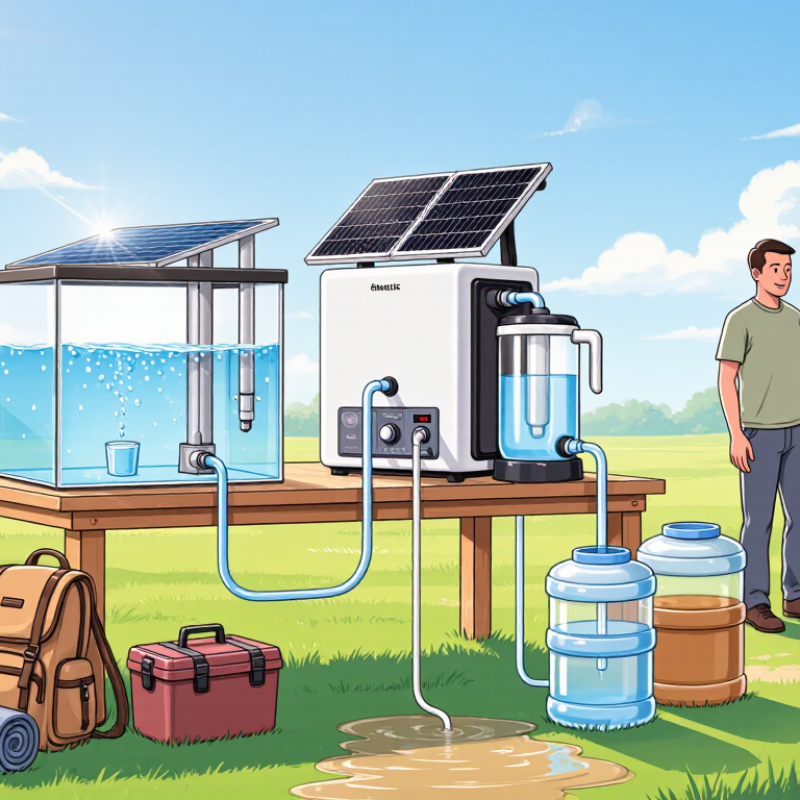
Solar water purification uses sunlight as heat or electricity to reduce contaminants. In a solar still, sunlight warms contaminated water in a covered basin. Water evaporates, then condenses on a cooler surface and runs into a clean container. Salts and many microbes remain behind. Some volatile chemicals may travel with the vapor, so distillation is not a universal fix.
Other systems use photovoltaic panels to power pumps, filters, ultraviolet treatment, or reverse osmosis. UV can inactivate many microbes, but it does not remove dissolved chemicals. Reverse osmosis can reduce salts, though membranes need suitable pretreatment and regular care. The WHO and UNICEF Joint Monitoring Programme reported that 2.2 billion people lacked safely managed drinking water in 2022. That figure describes a major access gap, not proof that any solar device will make any source safe. Not always. Water quality, sunlight, storage, and maintenance all matter. A cloudy day can reduce output, and a dirty collection tank can undo treatment. I should not pretend sunlight guarantees safe water. Buyers should check independent performance testing against the contaminants found in their own source water, then test treated water periodically. A glass may look clear and still be unsafe.
| System Type | How It Works | What It Can Treat | Typical Output or Operating Need | Advantages | Limitations and Buyer Checks | Common Applications |
|---|---|---|---|---|---|---|
| Solar still (solar distillation) | Sunlight heats source water. The water evaporates, leaving most dissolved salts and non-volatile contaminants behind; vapor condenses on a cooler surface and is collected. | Can reduce salinity, many dissolved minerals, and microbes. It does not reliably remove every volatile chemical; the source water and still materials matter. | Output depends strongly on sunlight, temperature, humidity, and collector area. A small basin still commonly produces only a few liters per square meter per day under favorable conditions. | Uses direct solar heat and has few electrical parts. Useful where brackish or saline water is available and daily demand is modest. | Low production per area; needs regular cleaning and a safe collection container. Check seals, materials, condensate hygiene, and whether volatile contaminants are a concern. | Households, emergency use, and small-scale water production in sunny locations. |
| Photovoltaic-powered reverse osmosis (PV-RO) | Solar panels generate electricity for a pump. Pressure pushes water through a semipermeable membrane, separating much of the dissolved salt and other contaminants from the product water. | Commonly used for desalination and reduction of many dissolved substances. Performance depends on membrane design, pretreatment, and feed-water quality. | Output varies with panel size, sunlight, pump pressure, water salinity, and system design. Batteries or water storage can help manage variable solar supply. | Can produce more water than a small solar still and is suitable for brackish or seawater when properly designed. | Requires membrane replacement, pretreatment, and management of concentrated reject water. Verify recovery rate, energy needs, service parts, and performance data for the intended feed water. | Homes, remote facilities, and community systems with saline or brackish source water. |
| Solar-electric UV disinfection | Photovoltaic electricity powers a UV lamp or reactor. UV light inactivates susceptible microorganisms as water passes through the treatment chamber. | Can inactivate many bacteria, viruses, and protozoa when the required UV dose is delivered. It does not remove salts, metals, particles, or most chemicals. | Requires a suitable UV dose and adequate flow control. Clear, low-turbidity water helps UV reach microorganisms; a battery may maintain operation when sunlight is intermittent. | Fast disinfection with no disinfectant chemical added to the water. Can be combined with filtration for broader treatment. | Needs electricity, lamp or emitter maintenance, and protection from power interruptions. Check validated flow rate, UV-dose monitoring, pretreatment requirements, and backup plans. | Point-of-use treatment where the main concern is microbial contamination and water is already clear. |
| Solar thermal pasteurization | A solar thermal collector heats water to a specified temperature for a specified holding time, reducing disease-causing microorganisms. | Can inactivate many pathogens when the required temperature and time are achieved. It does not remove dissolved salts, metals, or chemical contaminants. | Heating time depends on starting temperature, sunlight, water volume, and collector design. As a general reference, water held at 65°C for 6 minutes reaches a commonly used pasteurization condition; use validated equipment and instructions. | Can treat batches without a membrane and may use direct solar heat rather than electricity. | Output is weather-dependent, and treated water can be recontaminated during cooling or storage. Check temperature indicators, batch capacity, and safe storage arrangements. | Household or small-group microbial treatment where fuel is limited and batch treatment is practical. |
| Solar water disinfection (SODIS) | Clear water is placed in suitable transparent containers and exposed to sunlight. UV radiation and heat work together to reduce microbial risks. | Intended for microbial disinfection; it does not remove chemical pollutants, salinity, or suspended solids. | Exposure time depends on weather and sunlight intensity. Public-health guidance commonly advises about 6 hours of strong sunlight, or longer exposure when conditions are cloudy; follow current local guidance. | Low equipment and energy requirements. Can be useful when treating small quantities of relatively clear water. | Not suitable for chemically contaminated water or very turbid water. Containers must be clean and appropriate for the method; treated water must be protected from recontamination. | Emergency or household treatment of small volumes where other treatment options are unavailable. |
Buyer note: No single solar treatment method addresses every hazard. Choose a system based on a water-quality test, daily demand, local sunlight, maintenance access, and verified treatment performance. Disinfection methods do not remove chemical contaminants, while desalination and distillation may require careful handling of reject water or condensate.