Rotary Sensors convert shaft movement into position, speed, or direction data for machines and control systems. They appear in robot joints, packaging lines, vehicle controls, and industrial drives. A sensor may look small, but its accuracy can affect how smoothly an entire assembly operates. Small details matter.
Worldwide suppliers offer different sensing methods, including optical, magnetic, inductive, and resistive designs. Each approach brings trade-offs in resolution, durability, size, and cost. A dusty production floor may call for a sealed housing, while a compact actuator may need a short body and a specific electrical interface. There is no single best sensor for every application.
This overview introduces leading Rotary Sensors suppliers and the factors buyers can use to compare them. Useful checks include operating range, repeatability, output type, connector options, temperature limits, documentation, and technical support. Buyers should also confirm that published specifications match their actual mounting and operating conditions. A catalog rating alone is not enough.
Supplier comparisons can be imperfect. Product families change, regional availability varies, and the most recognized brand may not fit a particular design. This guide is intended as a practical starting point, not a universal ranking. Careful verification with current datasheets and supplier engineers remains essential before selecting a component.
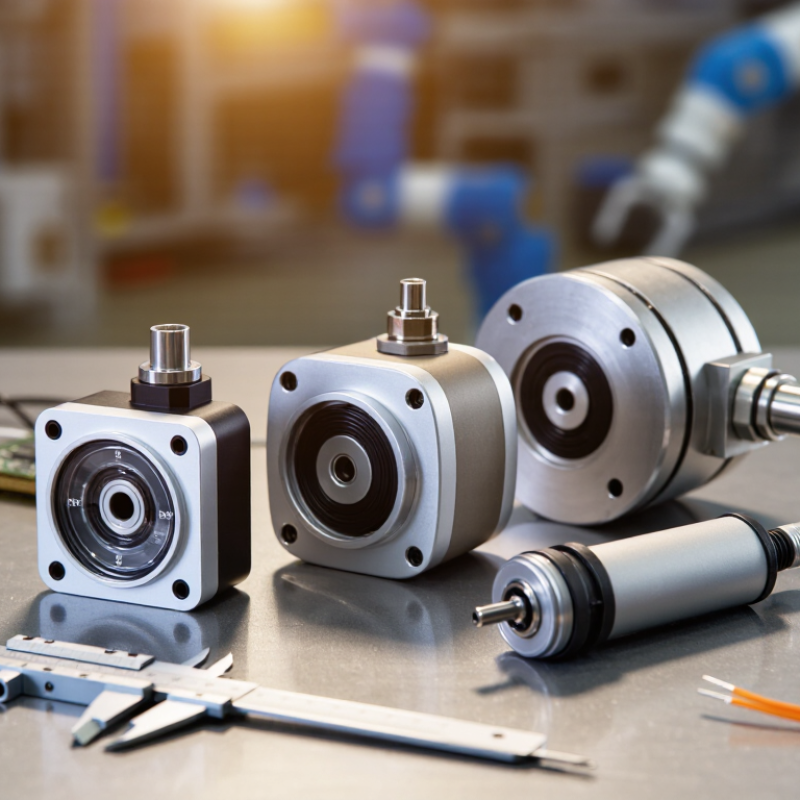
Rotary sensors measure the angle, speed, or direction of a rotating shaft or component. In a motor, for example, a sensor can report how far the shaft has turned. A controller uses that information to adjust movement or maintain a target position. Some sensors also detect a full rotation count.
The measurement method depends on the sensor design. Optical models read light patterns passing a detector, while magnetic models sense changes in a magnetic field. Resistive designs track changes in electrical resistance as a shaft turns. These methods produce signals that equipment can interpret as position or motion. Resolution matters: a sensor with more measurable steps can detect smaller angular changes, though installation and calibration still affect results. Real setups can be messier than diagrams suggest.
Tips: Check the sensor’s measuring range, resolution, and output type before installation. Align the shaft carefully and keep wiring away from strong electrical noise. Test readings through a full turn. Small changes matter. If values drift, inspect mounting and calibration before replacing the sensor.
Rotary sensors convert shaft movement into electrical signals for speed, angle, or position control. Two common formats are incremental and absolute encoders. Incremental units report movement as pulses, so a controller may need a reference point after startup. Absolute units provide a defined position code, even after power loss. That matters. The right choice depends on whether a system needs continuous motion tracking or a reliable angle reading after restart.
Several technologies create these signals. Potentiometric sensors use a moving contact across a resistive track; they are simple, but contact wear can limit service life. Optical encoders read patterned disks with light, offering fine resolution in clean, protected assemblies. Magnetic sensors detect changes in a magnetic field and often tolerate dust or vibration better. Inductive designs sense metal targets without direct contact, while capacitive types detect changes in electrical capacitance. Each has trade-offs in accuracy, environmental tolerance, cost, and installation space.
Tips: Check shaft alignment, operating temperature, vibration, and required resolution before selecting a sensor. Match the output signal to the controller, too. A high-resolution unit can still disappoint if its mounting shifts or its signal wiring picks up electrical noise. Specifications help, but the actual machine environment deserves a close look.
Evaluating rotary sensor suppliers worldwide requires more than comparing resolution and unit price. Match the sensing method—optical, magnetic, or inductive—to actual conditions, including shaft speed, vibration, dust, and temperature swings. Check whether the application needs incremental pulses or an absolute position value. Then compare accuracy, repeatability, starting torque, interface compatibility, and rated service life using the same test conditions.
Demand is growing across automation, but the figures need context. The International Federation of Robotics reported 541,302 industrial robot installations worldwide in 2023, in World Robotics 2024. This is not a rotary-sensor sales figure; it indicates the scale of equipment where reliable position feedback matters. Ask suppliers for application-specific validation data, not only a headline resolution. A sensor that performs well on a quiet bench may drift near a hot motor or under repeated shock.
Inspect quality evidence closely. Request calibration records with traceability, environmental test results, and clear definitions for accuracy and failure rates. For ingress-protection claims, check the stated test conditions against IEC 60529. Also review production capacity, regional technical support, replacement lead times, and change-notification practices. Small details matter. A sample test on your own shaft, cable, and controller can reveal interface problems early. Supplier scorecards help, but they can hide weak assumptions; revisit the weighting after field trials.
Supplier strength is not just a wide catalog. It shows in repeatable accuracy, stable output, and clear support for installation and calibration. Rotary sensors serve applications from compact control knobs to industrial motor feedback. Grand View Research estimated the global position sensor market at USD 5.3 billion in 2022 and projected 9.4% annual growth from 2023 to 2030. Its analysis includes rotary and linear technologies, reflecting demand across varied applications. For buyers, compare suppliers by sensing method, usable angular range, resolution, electrical interface, and tolerance to vibration or temperature. A tiny mismatch can cause noisy readings. That matters.
Tips: Check the datasheet’s test conditions, not just its headline accuracy. Ask how the sensor performs after temperature cycling and extended rotation. Confirm that the connector and shaft fit your assembly before ordering samples. A bench test with your actual controller can expose interface issues early.
Contactless magnetic and inductive designs can reduce mechanical wear, while optical designs may suit applications needing fine resolution in controlled conditions. No technology wins everywhere. Request documented repeatability and lifecycle test results, then compare them against your operating environment.
Supplier documentation can be useful, but it may not fully reflect your mounting arrangement. Verify the details yourself.
Rotary sensors translate shaft movement into usable position or speed feedback. Their role is easy to miss, but it affects how smoothly machines start, stop, and hold position. In factory robots, sensors track joint angles and help controllers coordinate repeated movements. The International Federation of Robotics’ World Robotics 2024 reported 4,281,585 industrial robots operating in factories worldwide in 2023. That installed base signals broad demand for dependable feedback components, though it does not measure rotary sensor sales directly.
Automotive and energy applications place different demands on suppliers. The International Energy Agency’s Global EV Outlook 2024 estimated nearly 14 million electric car sales in 2023, about 18% of global car sales. Rotary sensing can support motor control, steering, and other rotating assemblies, where vibration, heat, and limited installation space matter. Details matter here. A sensor that performs well on a clean test bench may behave differently beside a hot motor or under persistent vibration.
Wind turbines also rely on controlled rotation. The Global Wind Energy Council’s Global Wind Report 2024 recorded 117 gigawatts of new wind capacity in 2023. Rotary feedback can help monitor blade pitch and yaw movement, often in exposed, hard-to-service locations. Suppliers therefore need to explain environmental limits, accuracy, interface options, and expected service life—not just resolution. A practical specification should match the actual shaft, operating temperature, and maintenance plan. There is no universal best choice; buyers sometimes underestimate installation tolerances.
An anonymized overview of common rotary-sensor supplier capabilities worldwide. Entries describe established sensor technologies and typical applications; they are not rankings or claims about specific companies.
| Supplier Profile | Common Technology | Typical Industries Served | Representative Applications | Common Output or Interface | Selection Considerations |
|---|---|---|---|---|---|
| Industrial automation specialists | Optical and magnetic incremental or absolute rotary encoders | Factory automation, packaging, material handling, printing | Motor speed feedback, conveyor positioning, packaging-machine synchronization, rotary indexing | Incremental A/B/Z signals; SSI, BiSS, or fieldbus options on some models | Resolution, maximum speed, shaft or hollow-shaft fit, environmental rating, and electrical compatibility |
| Motion-control and motor-feedback suppliers | Optical, magnetic, and inductive encoders; resolver-style sensors | Robotics, servo systems, machine tools, semiconductor equipment | Servo-motor commutation, joint-position feedback, spindle speed monitoring, precision axis control | Incremental signals, serial absolute data, or resolver signals, depending on sensor type | Accuracy, latency, vibration tolerance, motor integration, and compatibility with the drive |
| Automotive and transportation sensor suppliers | Contactless magnetic, inductive, and potentiometric rotary position sensors | Automotive, commercial vehicles, rail, off-highway equipment | Steering-angle measurement, pedal position, throttle position, valve position, and actuator feedback | Analog voltage, PWM, SENT, or vehicle-network interfaces, depending on application | Temperature range, vibration resistance, electrical diagnostics, safety requirements, and service life |
| Heavy-duty and mobile-equipment specialists | Sealed magnetic encoders and rugged rotary position sensors | Agriculture, construction, mining, forestry, marine equipment | Boom and joint angle measurement, steering feedback, implement positioning, winch and drivetrain monitoring | Analog, PWM, incremental, or CAN-based outputs, depending on system design | Ingress protection, shock and vibration resistance, connector sealing, temperature range, and mounting strength |
| Aerospace and defense sensor suppliers | Resolvers, precision synchro-type sensors, and high-reliability encoders | Aerospace, defense, flight-control systems, test equipment | Actuator position feedback, antenna orientation, control-surface measurement, and precision test rigs | Resolver or synchro signals; digital interfaces may be used in encoder-based systems | Environmental qualification, traceability, reliability, electromagnetic compatibility, and program-specific approvals |
| Process-control and instrumentation suppliers | Rotary potentiometers, magnetic angle sensors, and absolute encoders | Process industries, utilities, water treatment, building systems | Valve and damper position measurement, actuator feedback, control-panel adjustment, and flow-control equipment | Resistance, analog voltage or current, or digital position data | Measurement range, linearity, repeatability, process environment, and integration with the control system |
| Medical and laboratory equipment suppliers | Compact optical or magnetic encoders and rotary position sensors | Medical devices, laboratory automation, diagnostic equipment | Rotary stage positioning, pump and actuator feedback, instrument knob measurement, and sample-handling mechanisms | Incremental or absolute digital signals; analog output in some designs | Compact dimensions, repeatability, low noise, cleaning requirements, and equipment-level compliance needs |
| Regional distributors and application-focused integrators | Multiple technologies sourced for specific machine and system requirements | Manufacturing, energy, logistics, OEM equipment, maintenance and repair | Replacement encoder selection, interface conversion, retrofit projects, and sensor integration | Selected to match the existing controller, drive, or measurement system | Availability, mechanical interchangeability, technical support, documentation, and lifecycle requirements |