
Top 10 Types of ESS Connectors for Global Buyers?

Energy storage systems are becoming more modular, distributed, and demanding. At the center of many designs sits the Ess Connector, linking battery modules, busbars, inverters, monitoring units, and protection equipment. A small connector can influence installation time, service access, thermal performance, and long-term reliability.

This guide examines ten connector types commonly considered by global buyers. It covers board-to-board, wire-to-board, circular, high-voltage, modular, quick-disconnect, and busbar connection solutions. Each type serves a different purpose. Some prioritize compact assembly. Others support higher current, stronger mechanical retention, or easier field maintenance. Details matter here. A connector rated for 200 amps may still perform poorly under heat, vibration, or repeated mating cycles.

Real purchasing decisions require more than a product photograph. Buyers should review contact materials, insulation ratings, sealing performance, creepage distances, cable compatibility, locking methods, and test documentation. Supplier experience also matters. Ask for sample validation, temperature-rise data, salt-spray results, and clear traceability records. Certifications should be checked against the intended market and application.

There is no universal best option.

Even experienced teams can overlook installation errors or unclear specifications. Product names also vary between suppliers, which creates confusion during comparison. This overview therefore treats each ESS Connector category critically, rather than presenting simple rankings. It aims to help engineers, distributors, and procurement teams ask better questions, reduce avoidable selection risks, and build a more dependable sourcing process. Performance must be verified in the actual system, not assumed from a catalog alone.
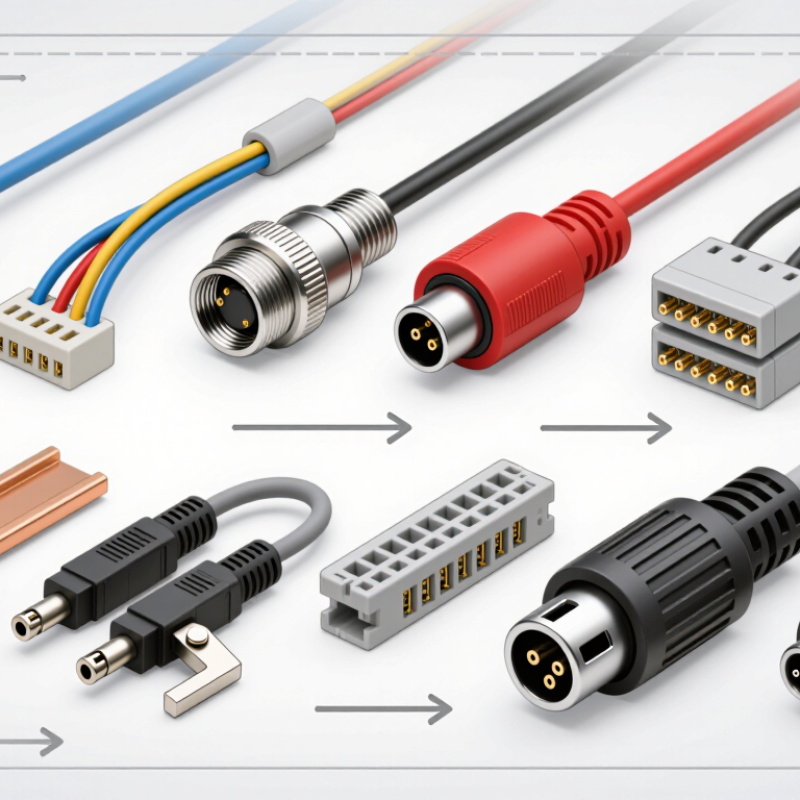
Top 10 Types of ESS Connectors for Global Buyers?

What Are ESS Connectors and Why Do They Matter?

Energy storage system (ESS) connectors join batteries, inverters, busbars, sensors, and control equipment. They carry power, signals, or both. Unlike ordinary plugs, ESS connectors often face high current, heat, vibration, moisture, and repeated maintenance.

A power connector may use copper contacts and a locking mechanism to prevent accidental separation. Signal connectors transmit temperature, voltage, or state-of-charge data. Grounding connectors help control fault currents. Some systems also require high-voltage interlock loops, pre-charge connections, or liquid-cooling interfaces. Each type serves a different safety function.

Connector quality directly affects system uptime. A loose contact can create resistance, heat, and discoloration inside a cabinet. That small interface matters. During inspection, technicians should check contact pressure, cable crimping, insulation damage, and enclosure sealing. Heat leaves clues. However, visual inspection is not enough. Buyers should request current ratings, voltage ratings, mating-cycle data, temperature limits, and test records aligned with applicable electrical standards.

Global projects add practical complications. Cable sizes, installation methods, maintenance access, and environmental conditions vary by site. A connector suitable for a dry indoor room may fail in a coastal container. Buyers should also verify polarity protection, keying, fire performance, and replacement availability. A checklist reduces mistakes, but it is not infallible. Poor assembly can defeat a well-designed connector, so sample testing and trained installation remain necessary.

Top 10 Types of ESS Connectors for Global Buyers — What Are ESS Connectors and Why Do They Matter?
No. ESS Connector Type Primary Function Typical Voltage Range Typical Current Range Common Protection Level Typical ESS Location Important Selection Criteria
1 High-Voltage Battery-to-Inverter Connector Transfers high-voltage DC power between the battery rack and the power conversion system. 400–1,500 V DC 100–500 A continuous IP54–IP68 when mated Battery racks, containers and power conversion units Voltage rating, DC load-breaking capability, touch protection, keying, temperature rise and HVIL compatibility.
2 Battery Module-to-Module Connector Connects individual battery modules in series or parallel within a rack or cabinet. 48–1,000 V DC 50–300 A continuous IP20–IP67, depending on enclosure location Residential, commercial and utility-scale battery modules Compact size, polarity protection, mechanical keying, low contact resistance and vibration resistance.
3 Busbar-to-Busbar Connector Provides a low-resistance connection between copper or aluminum busbars. Up to 1,500 V DC or AC 200–1,000 A, depending on conductor size Usually installed inside an enclosure; protection depends on the housing Battery combiner boxes, DC distribution panels and switchgear Conductor material, allowable temperature rise, contact pressure, torque control and short-circuit withstand.
4 Cable-to-Busbar Compression Connector Terminates flexible power cables on copper or aluminum busbars using lugs, clamps or bolted interfaces. Up to 1,500 V DC 50–600 A IP00–IP68, based on the completed assembly Rack wiring, DC cabinets and battery junction boxes Correct cable cross-section, crimp quality, plating, galvanic compatibility and resistance to thermal cycling.
5 Touch-Safe DC Plug Connector Enables safe connection and disconnection of DC power cables while reducing accidental contact with live parts. 48–1,500 V DC 30–350 A IP65–IP68 when mated Outdoor battery cabinets, mobile storage systems and service interfaces Finger-safe design, locking mechanism, pre-mate grounding, polarization and resistance to dust and moisture.
6 Low-Voltage BMS Signal Connector Carries battery-management signals, temperature-sensor lines, balancing circuits and communication wiring. 12–60 V DC Up to 5 A per contact IP20–IP67 Battery modules, BMS control boards and rack controllers Contact count, signal integrity, shielding, low-level contact reliability and resistance to vibration.
7 HVIL Interlock Connector Monitors whether high-voltage connectors, covers and service disconnects are properly closed. 12–60 V DC control circuit Typically below 1 A IP54–IP67 High-voltage battery packs, service disconnects and power cabinets Positive engagement, fail-safe contacts, sequencing, mechanical robustness and compatibility with the safety circuit.
8 Board-to-Board BMS Connector Links control boards, monitoring boards and communication modules inside battery equipment. Up to 60 V DC Typically below 3 A per contact Usually IP00 inside a protected enclosure BMS electronics, monitoring units and embedded control assemblies Mating cycles, contact pitch, retention force, insulation distance and high-speed signal performance.
9 AC Power Terminal Block Connects grid-side AC conductors to inverters, auxiliary power systems and distribution equipment. 120–690 V AC 16–300 A IP20–IP65 inside suitable enclosures AC distribution panels, inverters and auxiliary systems Rated cross-section, creepage and clearance, short-circuit rating, vibration resistance and installation torque.
10 Protective-Earth and Grounding Connector Creates a reliable protective connection between battery enclosures, racks, cabinets and the grounding system. System-dependent; commonly up to 1,000 V AC/DC Fault-current dependent; often 25–300 A for bonding paths Indoor or outdoor rating according to installation Metal battery enclosures, racks, cabinets and containerized ESS systems Low impedance, corrosion resistance, permanent bonding, verified contact area and compatibility with enclosure materials.
Buyer note: The voltage, current and IP figures shown are typical design ranges rather than universal ratings. Final selection should be based on the complete connector assembly, conductor size, ambient temperature, mating condition, applicable installation rules and required certification. Common reference areas include IEC 60529 for ingress protection, IEC 61984 for connector safety requirements and relevant regional requirements for energy-storage equipment.

How to Classify ESS Connectors by Design and Application

Top 10 Types of ESS Connectors for Global Buyers

ESS connectors should be classified by design and application, not appearance alone. The ten common types include busbar, bolt-on, plug-in, board-to-board, wire-to-board, terminal block, circular, quick-disconnect, feedthrough, and high-voltage interlock connectors. Busbar and bolt-on designs suit fixed battery racks. Plug-in and quick-disconnect types support faster field replacement. Board-to-board connectors fit compact control modules. Wire-to-board and terminal blocks simplify cabinet wiring. Circular and feedthrough connectors help protect communication or power paths in demanding enclosures. High-voltage interlock connectors add monitoring support for safer maintenance.

Application changes the selection. Indoor rack systems often prioritize touch protection, current capacity, and service access. Outdoor cabinets need sealing, corrosion resistance, and stable locking under vibration. The International Energy Agency reported nearly 42 GW of new battery storage capacity in 2023, showing how quickly connector demand is expanding. IEC 61984 and IEC 60664 also guide connector safety and insulation coordination. Yet, standards do not replace testing. A connector that passes a laboratory check may still suffer from heat, dust, or uneven torque onsite.

Tips: Match connector design with voltage, current, IP rating, cable size, mating cycles, and installation space. Ask for temperature-rise curves and salt-spray results. Do not trust a catalog image. This classification is useful, but imperfect. Real projects often combine several connector types, and installation mistakes remain a major risk.

The Top 10 ESS Connector Types for Global Buyers

The Top 10 ESS Connector Types for Global Buyers

Energy storage systems are becoming more demanding. The IEA’s Batteries and Secure Energy Transitions report states that global energy storage capacity must increase sixfold by 2030. Connector selection now affects safety, installation time, and service life.

The top ten ESS connector types are busbar connectors, ring terminals, stud terminals, screw terminal blocks, spring-clamp terminals, pluggable terminal blocks, high-current quick-disconnect connectors, photovoltaic DC connectors, signal connectors, and grounding connectors. Busbar and stud terminals suit high-current battery racks. Ring terminals offer simple, familiar maintenance. Spring-clamp designs can reduce wiring time. Pluggable blocks help field technicians replace modules faster. High-current quick-disconnect connectors support repeated service work. Photovoltaic DC connectors link solar inputs. Signal connectors carry temperature, voltage, and communication lines. Grounding connectors protect conductive cabinets. Liquid-cooling interfaces also matter, although they are sometimes ignored during early purchasing.

BloombergNEF’s Energy Storage System Cost Survey 2024 reported continued declines in system costs, increasing pressure to control installation labor and replacement risks. Buyers should check current rating, contact resistance, touch protection, insulation distance, vibration performance, and regional certification requirements. A connector may pass a laboratory test yet fail after dust, moisture, or repeated mating cycles. That detail is easy to miss.

The ranking is not absolute. Site voltage, enclosure design, climate, and technician skill change the best choice. A low-cost connector can become expensive after one difficult service visit. I would not treat datasheet current as real-world current without thermal testing. Practical trials still reveal uncomfortable mistakes.

Top 10 ESS Connector Types for Global Buyers

Typical continuous current capacity of connector types commonly used in battery energy storage systems (ESS).

Values are representative engineering ranges for common ESS applications. Actual ratings depend on conductor size, contact material, temperature rise, insulation system, enclosure design, and applicable safety standards.

Key Technical Standards and Safety Requirements

Top 10 Types of ESS Connectors for Global Buyers

Key Technical Standards and Safety Requirements

Energy storage system connectors include power, signal, communication, grounding, busbar, and quick-lock types. Buyers should assess more than voltage and current ratings. The connector must match the battery chemistry, enclosure design, installation method, and expected service life. Small details matter.

A loose terminal can create heat, resistance, and eventually a dangerous failure.

For high-voltage DC systems, check creepage and clearance distances against IEC 60664-1. Connector construction should also align with applicable requirements in IEC 61984 and IEC 62477-1. Battery modules may require testing under IEC 62619, while the complete storage system can involve UL 9540 and fire propagation evaluation under UL 9540A. Transported battery assemblies commonly need UN 38.3 testing. These standards are not interchangeable. Local certification rules still require verification.

Ingress protection is equally practical. An outdoor connector may need an IP65 or higher enclosure rating, but only after correct mating and cable sealing. Confirm touch protection, polarity coding, locking force, insulation resistance, and DC arc control.

Ask for temperature-rise data at the real operating current, not only laboratory conditions. Derating tables should cover ambient heat, cable size, and repeated cycling.

Installation quality remains a weak point. Specify torque values, contact plating, retention tests, and inspection intervals. A perfect connector can fail after poor crimping. It is also easy to overtrust a certificate; testing conditions may not represent a dusty, vibrating container site.

Buyers should request traceable reports, sample validation, and region-specific compliance evidence before approving volume orders.

How to Select the Right ESS Connector for Your Project

Selecting the right ESS connector starts with the electrical load, not its appearance. Confirm the system voltage, continuous current, peak current, and conductor size. A connector rated only for normal operation may fail during short overloads. Leave a practical safety margin.

The application environment matters just as much. Indoor cabinets may use compact board-to-wire or wire-to-wire connectors. Outdoor battery enclosures often need sealed circular, rectangular, or quick-disconnect designs. Check the IP rating, operating temperature, humidity, dust exposure, and vibration level. Salt air can accelerate corrosion. Choose suitable contact materials and protective housings. Small details matter.

Mechanical reliability is equally important. Look for secure locking, clear polarity, touch-safe construction, and a high-voltage interlock where required. Check creepage and clearance distances against the applicable regional standards. During installation, confirm the cable bend radius and the available service space. A connector that fits electrically may still be difficult to assemble or replace. Test sample assemblies under heat, vibration, and repeated mating cycles. Do not rely only on a catalogue rating. A common mistake is selecting the smallest connector to reduce cost. That choice can increase heating and maintenance work. Some projects also overlook field training, leaving technicians to guess the correct torque. That is an avoidable weakness. Record inspection results, torque values, and mating-cycle limits before production.

We are crowdfunding!
Privacy Overview

This website uses cookies so that we can provide you with the best user experience possible. Cookie information is stored in your browser and performs functions such as recognising you when you return to our website and helping our team to understand which sections of the website you find most interesting and useful.

Find out more about Kitepower's privacy policy