How to Choose the Best Portable Car Jump Starter

Choosing the right Portable Car Jump Starter can turn a stressful roadside stop into a manageable problem. A weak battery often fails without warning, especially after cold nights, forgotten lights, or long periods without driving. The best model should match your vehicle’s engine size, battery type, and everyday driving conditions. It should also offer clear instructions, strong clamps, reverse-polarity protection, and dependable battery capacity.

Real-world handling matters as much as advertised peak current. A compact unit may fit neatly inside a glove box, but tiny clamps and stiff cables can be frustrating beside a dark roadside. Look for a durable case, a bright emergency light, readable indicators, and a charging port that works with equipment you already own. Independent testing, manufacturer documentation, warranty support, and verified customer experiences can reveal weaknesses that product pages rarely mention. Marketing numbers are not enough.

Check the details carefully.

A responsible choice also considers storage and maintenance. Most lithium jump starters need periodic charging, even when unused. Extreme heat inside a parked car may reduce performance over time. I have learned that convenience can create false confidence; carrying a starter does not guarantee a successful jump. You still need safe parking, clean battery terminals, and correct connection steps. Some recommendations may change as battery technology improves, so this guide focuses on practical evidence rather than one universal winner. The goal is a reliable tool that fits your vehicle, your budget, and your ability to use it calmly when the engine will not turn over.
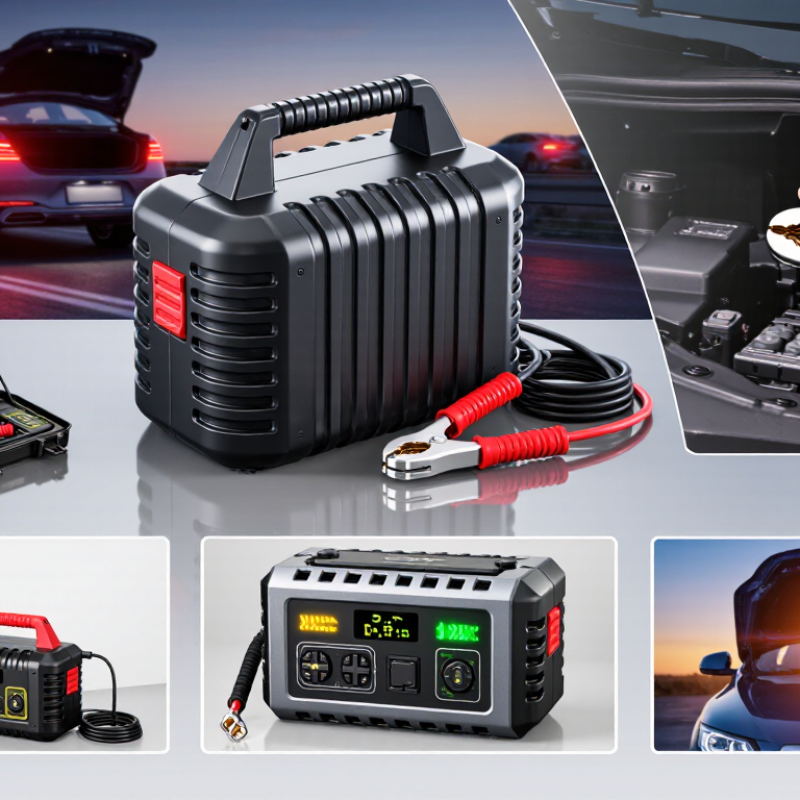
How to Choose the Best Portable Car Jump Starter

What a Portable Car Jump Starter Is and How It Works

How to Choose the Best Portable Car Jump Starter

A portable car jump starter is a rechargeable battery pack designed to start a vehicle with a weak 12-volt battery. It sends a short, high-current pulse through heavy-duty cables. That pulse helps the starter motor turn the engine.

Inside, the unit usually contains lithium cells, a control circuit, and safety sensors. The control system can detect reverse polarity, excessive heat, and short circuits. Some models also include a flashlight or USB charging ports. These features are useful, but they should not distract from starting performance.

In practice, check your vehicle’s battery voltage and engine size before choosing one. A compact unit may suit a small petrol engine, while a larger engine needs a higher starting-current rating. Read the vehicle manual carefully. Turn off the ignition and accessories before connecting the clamps. Attach the positive clamp to the positive terminal, then connect the negative clamp to a suitable ground point when instructed. The clamps should feel firm, not loose.

Wait a moment, then start the engine briefly. Do not keep cranking continuously. Let the starter cool between attempts. I once assumed a fully charged pack would solve every problem, but a damaged battery may still refuse to start. That limitation matters. A jump starter assists the battery; it does not repair it. Recharge the unit after use and inspect the cables for cracks. Small details prevent expensive mistakes.

How to Match a Jump Starter to Your Vehicle

How to Choose the Best Portable Car Jump Starter

How to Match a Jump Starter to Your Vehicle

Start with your vehicle’s electrical system. Most passenger cars use a 12-volt battery, but some commercial vehicles use 24 volts. Using the wrong voltage can cause serious damage. Check the owner’s manual, battery label, or a qualified technician before buying.

Engine size also matters. A small petrol engine usually needs less starting power than a large diesel engine. Choose a jump starter with enough cranking capacity for your engine, not only an impressive peak-current number. Manufacturers may measure peak power differently, so compare cranking ratings when available. A safety margin helps during cold mornings or repeated starting attempts.

Diesel engines need more power.

Battery condition changes the choice too. A completely flat battery may require stronger output than a weak battery with some remaining charge. Cable length, clamp quality, reverse-polarity protection, and low-temperature performance deserve attention. The unit should also fit your storage space and remain usable after several months without charging.

I once treated peak amps as the whole answer. That was too simple. A compact unit may look powerful but struggle with a large engine in freezing weather. Test the instructions before an emergency, keep the clamps clean, and stop if cables become hot or swollen. A jump starter supports the vehicle; it does not repair a failing battery or alternator.

How to Choose the Best Portable Car Jump Starter - How to Match a Jump Starter to Your Vehicle
Vehicle Type Typical Engine Size Required System Voltage Recommended Peak Current Suitable Battery Types Recommended Features
Small gasoline car Up to 2.0 L 12 V 400–800 A Standard 12 V lead-acid, AGM, or EFB battery Reverse-polarity protection, insulated clamps, charge indicator, and a compact design
Mid-size gasoline car 2.0–3.5 L 12 V 600–1,000 A Lead-acid, AGM, or EFB battery Heavy-duty clamps, short-circuit protection, over-temperature protection, and a built-in flashlight
Large gasoline car, SUV, or pickup 3.5–6.0 L 12 V 800–1,500 A High-capacity lead-acid or AGM battery Longer cables, high-current output, durable housing, and clear battery-status indicators
Small diesel car or van Up to 3.0 L 12 V 800–1,200 A Lead-acid or AGM battery High cold-cranking capability, robust clamps, low-temperature operation, and thermal protection
Large diesel SUV, pickup, or van 3.0–6.0 L 12 V 1,000–2,000 A High-capacity lead-acid or AGM battery Heavy-gauge cables, powerful clamps, high surge output, and a strong protective case
Commercial truck or heavy equipment Above 6.0 L or multiple batteries 12 V or 24 V 1,500–3,000 A or more Commercial lead-acid or AGM battery systems Selectable 12/24 V operation, extra-long cables, overload protection, and professional-grade construction
Motorcycle, scooter, or small recreational vehicle Below 1.5 L 12 V 200–600 A Motorcycle lead-acid, AGM, or lithium battery Low-current mode, small clamps, lightweight construction, and protection against incorrect connection
Vehicles with a lithium starter battery Check the vehicle manual 12 V, unless otherwise specified Follow the battery and vehicle manufacturer’s requirements Only use a jump starter explicitly approved for lithium starter batteries Battery-chemistry compatibility, controlled output, temperature protection, and detailed operating instructions
Key Specifications to Compare Before Purchase
Specification Practical Guideline Why It Matters
Peak current Choose a rating above the estimated requirement for your engine size, especially for diesel engines or cold climates. Higher starting current provides more reserve when the battery is deeply discharged or the engine is difficult to crank.
Starting current Compare this figure in addition to the advertised peak current. Starting current is generally more useful for judging sustained cranking performance than a brief maximum peak.
Battery capacity Portable models commonly range from approximately 8,000 to 25,000 mAh, although ratings may use different test conditions. Capacity affects the number of possible jump-start attempts and the ability to power USB devices.
Operating temperature Select a model rated for the lowest temperatures expected in your region. Cold temperatures reduce battery performance and increase the cranking demand of the vehicle engine.
Safety protection Look for reverse-polarity, short-circuit, over-current, over-temperature, and over-charge protection. These safeguards reduce the risk of sparks, cable damage, battery damage, and incorrect connection.
Clamp and cable quality Choose fully insulated clamps with secure teeth and cables long enough to reach the battery terminals. Reliable contact is essential for transferring high current safely and consistently.
Voltage compatibility Most passenger vehicles use 12 V systems; some heavy vehicles use 24 V systems. Connecting a jump starter with the wrong voltage can damage vehicle electronics and the battery.
Recharge and storage Recharge the unit according to its instructions and check its charge every few months. Portable jump starters gradually lose charge during storage and may not work when needed if neglected.
Vehicle Matching Checklist
Check What to Confirm Recommended Action
Vehicle voltage Identify whether the vehicle uses a 12 V or 24 V electrical system. Never use a 24 V jump starter on a 12 V vehicle or a 12 V unit on a 24 V vehicle.
Engine type Determine whether the engine is gasoline or diesel. Choose a higher current rating for diesel engines of similar displacement.
Engine displacement Check the engine size in the owner’s manual or vehicle specifications. Select a unit rated for the engine size or slightly above it.
Battery location Some vehicles place the battery in the trunk, under a seat, or in a remote compartment. Choose a model with cables long enough to reach the approved jump-start terminals.
Manufacturer instructions Review the vehicle manual for approved connection points and special procedures. Follow the vehicle manufacturer’s instructions before connecting any jump starter.

Which Power Ratings and Battery Specifications Matter

When choosing a portable car jump starter, power ratings deserve more attention than flashy size. Peak amperage shows the highest brief current the unit can deliver. It sounds impressive, but it does not predict every real-world start. Cranking amperage is more useful because it reflects sustained output during engine turnover. A four-cylinder gasoline engine usually needs less starting power than a large diesel. Cold weather matters. Check your vehicle manual before choosing a rating, especially for older engines or heavy-duty vehicles.

Battery capacity is commonly listed in milliamp-hours, yet that number alone can mislead. Voltage and usable watt-hours give a clearer picture of stored energy. A 12-volt starter with a 10,000 mAh label may not deliver 10,000 mAh at 12 volts. Internal conversion losses reduce available output. Lithium-ion packs are compact, while lithium iron phosphate cells generally offer strong thermal stability and long cycle life. Neither option is automatically best. Charging speed, storage temperature, and expected service life also deserve attention.

Look for thick, flexible cables, insulated clamps, reverse-polarity protection, and a clear charge indicator. From workshop experience, weak clamps can matter more than a large printed peak number. I once trusted a high-capacity unit that struggled after sitting in a cold trunk. That result was disappointing, and it changed my checklist. Select a starter with comfortable headroom above your engine’s normal requirement, rather than trusting an exaggerated maximum figure.

Safety Features and Practical Design Factors to Compare

A portable car jump starter should be judged by safety controls, not peak amps alone. AAA’s published roadside-assistance statistics place battery trouble at roughly one-quarter of service calls. That makes dependable emergency equipment practical, especially for older vehicles. I prefer units with reverse-polarity protection, short-circuit protection, overcurrent control, and temperature monitoring. These features should interrupt power when clamps touch incorrectly or cables overheat. Clear warning lights help, but I still check the connection twice.

Rated output matters. A small petrol engine may need less starting current than a large diesel engine. However, advertised peak current can be brief and misleading. Check the manufacturer’s starting-current rating, supported engine size, and operating temperature range. S&P Global Mobility reported that the average age of vehicles in the United States reached 12.5 years in 2023. Older cars may have corroded terminals or weak batteries, so a jump starter cannot fix every fault.

Practical design affects safe handling. Choose thick, flexible cables with insulated clamps and enough length to reach distant battery terminals. A bright work light is useful at night. A charge indicator prevents unpleasant surprises. Look for tested construction aligned with standards such as UL 2743, while verifying the exact model’s certification. Avoid storing the unit in a hot trunk for months. Lithium batteries dislike heat. I have learned that compact size is convenient, but tiny clamps can feel awkward in winter gloves. That detail is easy to miss.

How to Choose the Best Portable Car Jump Starter

Use the vehicle manufacturer's specifications as the final reference. As a practical starting point, compact petrol vehicles commonly need around 400–600 peak amps, midsize vehicles around 600–1,000 amps, and large petrol or diesel vehicles around 1,000–1,500 amps. Look for reverse-polarity, short-circuit, overcharge, and overheat protection, together with insulated clamps, clear status indicators, a battery-level display, and cables long enough to reach the vehicle battery safely.

How to Use, Test, and Maintain Your Jump Starter

How to Choose the Best Portable Car Jump Starter

A useful jump starter should match your vehicle’s engine size and battery type. Check its peak current, cable length, clamp quality, and safety protections. A clear charge indicator also matters during roadside use.

Before connecting it, park safely, switch off the vehicle, and remove metal jewelry. Inspect the unit for cracks, swelling, moisture, or damaged cables. Do not use damaged equipment.

Follow the vehicle and jump starter manuals carefully. Usually, the red clamp connects to the positive terminal first. The black clamp connects to the negative terminal or an approved metal ground point. Turn on the jump starter, then start the engine for only a few seconds.

If it fails, wait briefly before trying again. Repeated long cranking can overheat the starter and cables. I once rushed this step and created unnecessary sparks. That mistake changed how carefully I check each connection.

After the engine starts, switch off the jump starter before removing the clamps. Remove them in reverse order.

Tips: Charge the unit every two or three months, even when unused. Store it in a cool, dry place. Test it before a long trip with a battery tester or its built-in display. Check that the charge level remains stable. A weak reading needs attention. Keep the cables clean and tightly stored. Battery performance can decline quietly, so a quick test is worth the minute.

We are crowdfunding!
Privacy Overview

This website uses cookies so that we can provide you with the best user experience possible. Cookie information is stored in your browser and performs functions such as recognising you when you return to our website and helping our team to understand which sections of the website you find most interesting and useful.

Find out more about Kitepower's privacy policy