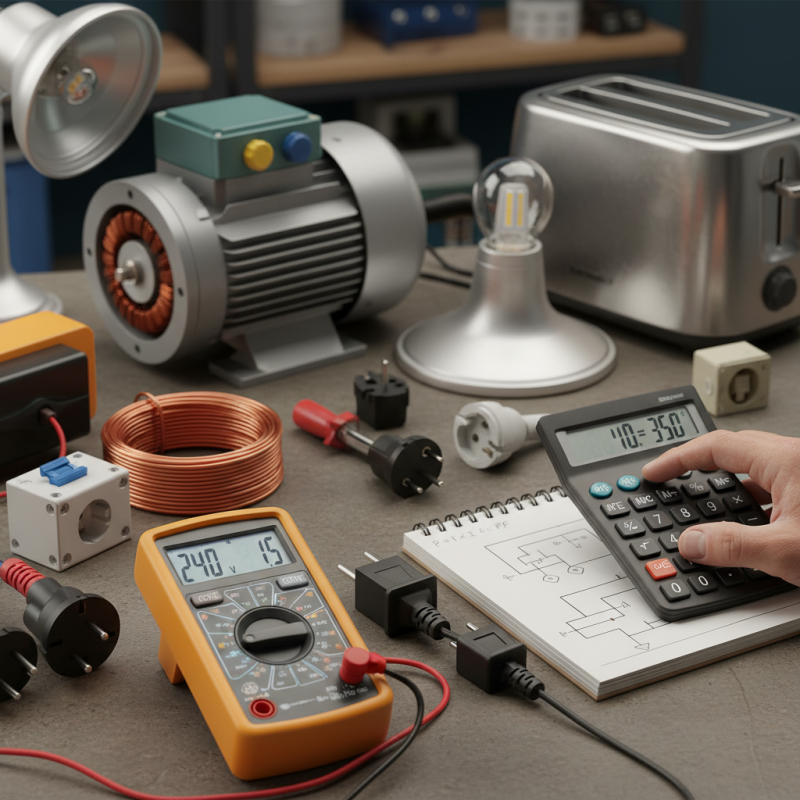
Understanding rated power is crucial for assessing electrical devices. Rated power indicates how much electrical energy a device can safely handle. It varies with different types of equipment. For instance, motors, appliances, and lighting fixtures all have specific rated power values.
Calculating rated power involves knowing both voltage and current specifications. It might seem straightforward, but mistakes can occur. Many overlook factors like power factor in AC circuits. This oversight can lead to devices operating inefficiently or even overheating. Accurate calculations are essential for safety and performance.
In practice, users often underestimate rated power. Some devices may consume more power during startup than in regular operation. This can lead to circuit overloads. It’s vital to consider the context in which a device operates. Relying solely on manufacturer labels may not always provide a complete picture. Being thorough can prevent unexpected failures.
Understanding rated power is essential for both manufacturers and consumers. Rated power refers to the maximum output a device can handle without overheating or failing. It’s typically measured in watts. Knowing this power rating allows users to choose appropriate devices for their needs and ensures safety during operation.
When looking at electrical devices, one must consider the rated power. Devices operating above their rated power can become unstable. For instance, a heater rated for 1500 watts should not be used with a power supply that exceeds this limit. Overloading can lead to risks such as fires or malfunctions.
This principle also applies to smaller devices. Even the simplest gadget, like a charger, has its rated power. If used incorrectly, it may not charge efficiently. Inadequate understanding of these ratings may lead people to buy unsuitable products. It’s crucial to reflect on how we match power requirements with actual usage. Proper calculation can prevent unnecessary failures, ensuring reliability in our daily electrical needs.
| Device Type | Rated Power (W) | Voltage (V) | Current (A) |
|---|---|---|---|
| Electric Heater | 1500 | 120 | 12.5 |
| Refrigerator | 200 | 120 | 1.67 |
| Air Conditioner | 2400 | 240 | 10 |
| Washing Machine | 500 | 120 | 4.17 |
| Vacuum Cleaner | 1200 | 120 | 10 |

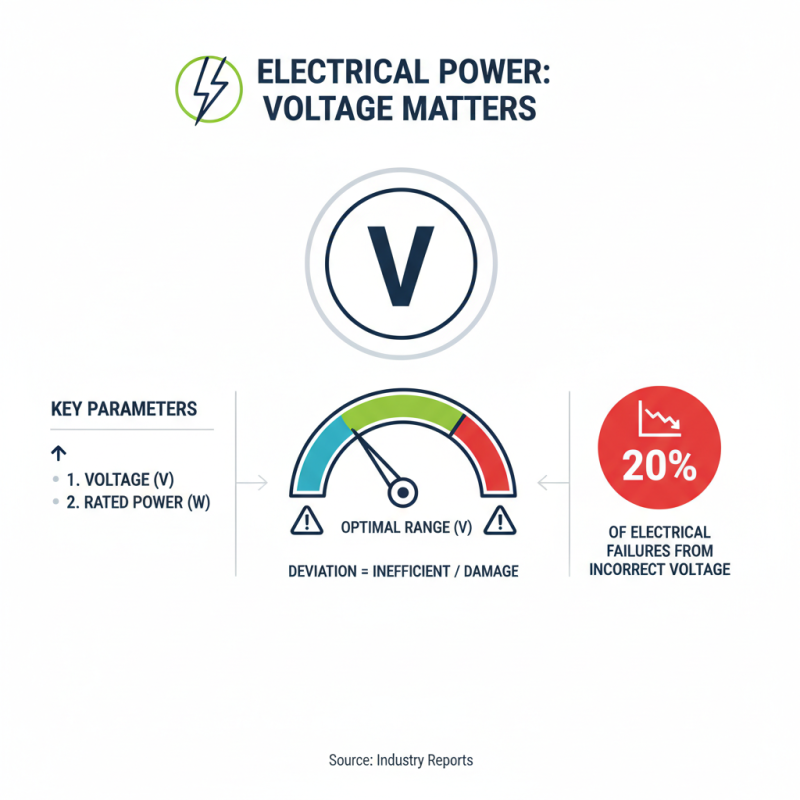
Calculating rated power for electrical devices involves understanding key parameters. One significant factor is voltage, which is often rated in volts (V). An electrical device typically operates within a specified voltage range. Deviating from this can lead to inefficiency or damage. Reports indicate that 20% of electrical failures stem from improper voltage levels.
Another crucial parameter is current. Measured in amperes (A), current determines how much electricity flows through the device. It's essential to ensure that the device's rated current aligns with its operational capacity. Overloading a device can lead to overheating, with industry data showing that about 30% of equipment failures result from exceeding current ratings.
Power factor is also important. It expresses the ratio of real power to apparent power. Industry standards suggest maintaining a power factor above 0.9 for optimal efficiency. Devices with low power factors waste energy. Ignoring this can result in higher utility bills and reduced device lifespan. Awareness of these parameters is vital for accurate power calculations and device longevity.
Calculating the rated power of electrical devices is crucial for safety and efficiency. Start by identifying the voltage and current ratings. Multiply these two values to find the power in watts. For example, if a device operates at 120 volts and draws 5 amps, the rated power is 600 watts. This approach helps clarify how much energy is needed.
Tips: Always check the specifications on your devices. Sometimes, labels can be unclear. Look for additional information if you’re unsure. Keeping a journal of your devices can also help you track their performance over time.
Calculate power in different scenarios too. Include power factor if the device is inductive. This change may affect the actual power consumed. If power factor is 0.8, for the previous example, the effective power is 480 watts. Be prepared that calculations might not always give clear answers. You may need to review your calculations or assumptions.
Consider potential energy losses as well. Temperature, age, and usage can alter the rated power. Devices may not perform as specified under certain conditions. Keeping these factors in mind enhances understanding. You might feel confused at times, but thorough checks lead to better outcomes.
Calculating the rated power of electrical devices is crucial for efficiency. Rated power indicates the maximum output without damage. Common formulas help us understand the parameters involved.
For resistive loads, use the formula: P = V × I. Here, P is power in watts, V is voltage in volts, and I is current in amperes. For AC circuits, consider factors like power factor: P = V × I × PF. The power factor (PF) accounts for the phase difference between voltage and current.
Tips: Always double-check your measurements. Accuracy can fluctuate due to equipment variance. Keep in mind that devices can have unexpected ratings. A recent study showed significant discrepancies in rated power between similar models, highlighting the need for careful evaluation.
When dealing with capacitive or inductive loads, the calculations change. Efficiency varies, and sometimes, real-world performance doesn't match theoretical formulas. For complex devices, consult further resources. Each calculation plays a pivotal role in energy consumption and safety.
When calculating the rated power for electrical devices, several factors can greatly impact your results. One significant aspect is load characteristics. Different devices have unique power requirements based on their operational modes. For example, a motor may need more power during startup than when it runs steadily. This variance can lead to unexpected power consumption results.
Another element to consider is environmental conditions. Temperature and humidity can influence the efficiency of electrical devices. High temperatures may cause a device to draw more power than its rating, while excessive humidity can affect insulation. Always assess the installation environment to ensure accurate rated power calculations.
Tips: