What Are the Best Renewable Energy Solutions in 2026?

In 2026, choosing the best Renewable Energy Solutions means looking beyond a single technology. Solar panels can turn a sunny rooftop into a source of household electricity. Wind turbines can supply power at utility scale, while geothermal systems draw on steady underground heat. Yet each option depends on local resources, grid capacity, costs, and community needs. There is no universal winner.

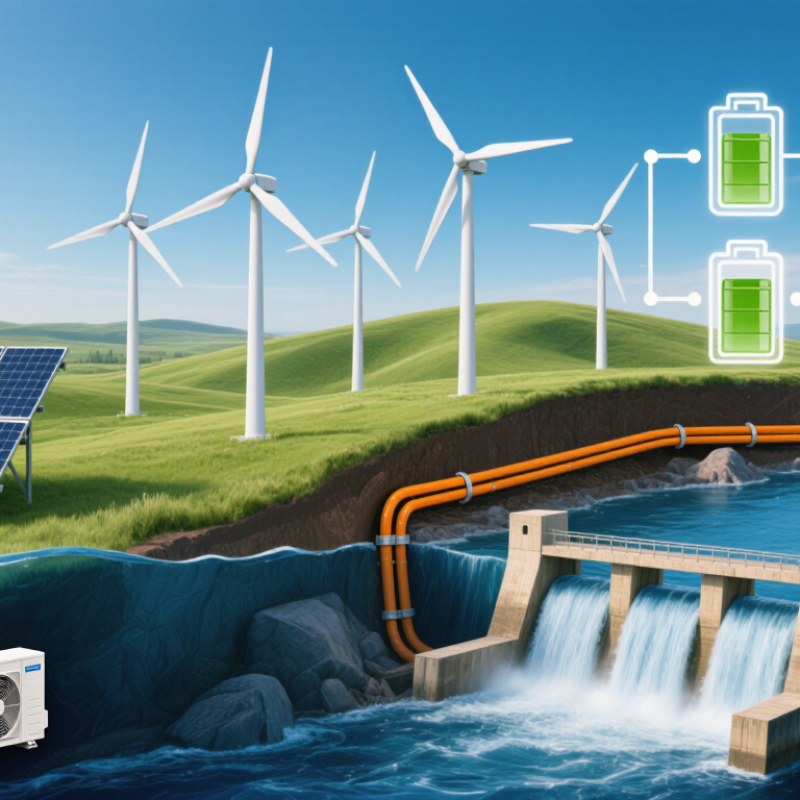
Stanford energy researcher Mark Z. Jacobson has described a vision of “100 percent wind, water, and sunlight” for meeting energy needs. His work highlights the potential of renewable power, but practical planning also matters. Batteries can shift solar energy into evening hours; upgraded transmission lines can connect distant wind and solar farms. Heat pumps and demand-response programs can reduce fossil-fuel use and ease pressure on the grid. Small details count, too: a shaded roof may produce less power than expected.

This guide compares the leading options, including solar, wind, hydropower, geothermal, and emerging energy storage. It considers where each solution works best, what trade-offs to examine, and how reliability changes with location and timing. Costs and performance vary. That deserves attention.

No technology is impact-free, and a clean-energy label alone does not guarantee a good fit. Equipment manufacturing, land use, permitting, and end-of-life planning all deserve scrutiny. Some claims are easier to make than to verify. The strongest choice is usually the one supported by local data, realistic financing, and a credible plan for dependable power—not the flashiest promise.
What Are the Best Renewable Energy Solutions in 2026?

How Renewable Energy Solutions Are Evaluated in 2026

What Are the Best Renewable Energy Solutions in 2026?
How Renewable Energy Solutions Are Evaluated in 2026

In 2026, a renewable energy solution should be judged by more than its headline price. Compare generation costs with local sunlight, wind patterns, land limits, and connection costs. The International Renewable Energy Agency’s Renewable Power Generation Costs in 2023 report found that 91% of newly commissioned utility-scale renewable capacity undercut the cheapest fossil-fuel alternative. That is a useful baseline, not a verdict. A low-cost project can still struggle if its output arrives when the grid needs less power.

Reliability matters. Assess how often a system produces electricity, how easily output can be forecast, and whether storage or flexible demand can cover gaps. The International Energy Agency’s Renewables 2024 report projects nearly 5,500 gigawatts of new renewable capacity from 2024 to 2030. That scale makes transmission, permitting, and grid integration central evaluation criteria, not footnotes. A battery may help, but its value depends on duration, use, and local grid conditions.

Environmental and community impacts deserve equal scrutiny. Examine lifecycle emissions, water use, habitat disturbance, equipment sourcing, and end-of-life plans. Ask who benefits and who bears construction disruption. Details matter. Project proposals may underestimate delays or overstate future storage benefits; reviewers should test assumptions against measured local data. There is no perfect scorecard. A sound comparison makes trade-offs visible and explains which uncertainties could change the result.
What Are the Best Renewable Energy Solutions in 2026?

One useful comparison is the global weighted-average levelized cost of electricity (LCOE) for newly commissioned utility-scale projects.

How to read this: Lower LCOE means lower average generation cost per unit of electricity. Onshore wind and solar PV had the lowest values in this comparison; the best choice for a specific project also depends on local resources, grid needs, storage, and site conditions.

Source: IRENA, Renewable Power Generation Costs in 2023. Values are global weighted averages in USD/kWh, not 2026 forecasts.

Solar Power: Rooftop, Utility-Scale, and Storage-Ready Systems

In 2026, rooftop solar is most useful when its design matches the household’s actual load. A south-facing roof is helpful, but shade, roof condition, and afternoon electricity use matter too. The International Energy Agency’s Renewables 2024 report projects solar photovoltaics will provide roughly 80% of global renewable capacity growth through 2030. That scale is encouraging. Yet a global forecast cannot tell a homeowner whether panels will pay back on one particular roof.

For utility-scale solar, the central advantage is volume: large sites can supply substantial daytime power. Their output still rises and falls with the sun, so grid connections and flexible demand are essential. Pairing solar with batteries can shift some electricity into evening hours, but storage adds cost and does not solve every seasonal shortfall. The IEA’s Batteries and Secure Energy Transitions report says battery storage capacity may need to reach 1,200 gigawatts by 2030 in its net-zero pathway. That is a pathway, not a guaranteed build-out.

“Storage-ready” should mean more than leaving space for a battery. Systems need compatible inverters, safe equipment locations, and clear plans for future expansion. Still, adding a battery is not automatically the sensible choice. A household with little evening use may gain less than expected. Good planning begins with measured usage, local solar conditions, and realistic assumptions about power outages and export limits.

Wind Power: Onshore and Offshore Options

Onshore wind remains the more established option for many 2026 projects. Turbines can share space with farms and grazing land, while access roads and nearby transmission lines can simplify construction. The Global Wind Energy Council’s Global Wind Report 2025 recorded 109 gigawatts of new onshore capacity in 2024. That matters. Yet a windy map is not enough: local grid capacity, wildlife impacts, and community support can decide whether a project works. I would treat early site assessments as essential, not administrative paperwork.

Offshore wind can tap stronger, steadier winds, especially where coastal demand is high. But foundations, undersea cables, port access, and harsh marine conditions add complexity. The same report counted 8 gigawatts of new offshore capacity in 2024, far below onshore additions. IRENA’s Renewable Power Generation Costs in 2024 estimated global weighted-average electricity costs of about 3.4 cents per kilowatt-hour for onshore wind and 7.9 cents for offshore wind. These are broad historical averages, not a forecast or a project quote. Not everywhere.

For 2026 decisions, compare the full system, not just turbine output. Onshore may suit inland regions with strong grids and workable sites. Offshore may fit coastal systems that can build transmission and port infrastructure. I would still challenge a simple “cheapest wins” conclusion: a delayed grid connection can undermine either choice, and local conditions change the numbers.

Dispatchable Renewables: Hydropower, Geothermal, and Sustainable Bioenergy

Hydropower, geothermal, and sustainable bioenergy can supply electricity when wind and solar output falls. The International Energy Agency’s 2021 Hydropower Special Market Report estimates that hydropower provides about 16% of global electricity. Reservoirs can also help balance the grid during evening demand peaks. Yet drought can shrink that flexibility, and new dams may disrupt river habitats. Reliable power has trade-offs.

Geothermal plants draw heat from underground, offering steady output day and night. In The Future of Geothermal Energy (2024), the IEA estimates that advanced geothermal could reach 800 gigawatts of global capacity by 2050, meeting roughly 15% of electricity-demand growth. Those figures describe potential, not a guarantee. Drilling remains costly and site conditions matter. A promising forecast is not a finished project.

Sustainable bioenergy can use residues such as forestry by-products and agricultural waste, stored and burned when power is needed. Its climate value depends on what is harvested, how it is transported, and whether regrowth replaces what was used. That accounting can be messy. Calling a fuel “renewable” does not automatically make it low-carbon. Strong feedstock tracking and lifecycle emissions checks are essential, especially where crops compete with food production or natural habitats.

Matching Renewable Solutions to Local Needs and Grid Conditions

What Are the Best Renewable Energy Solutions in 2026?
Matching Renewable Solutions to Local Needs and Grid Conditions

The best renewable system is the one that fits local weather, demand, land, and grid capacity. In sunny regions, rooftop or utility-scale solar can supply daytime power, while batteries help shift some output into evening hours. Wind may suit coastal areas or open plains with steady resources. Geothermal and hydropower can provide more consistent generation, but only where geology, water, and ecological conditions allow. There is no universal winner. IRENA’s Renewable Capacity Statistics 2025 reports that global renewable capacity reached 4,448 GW in 2024, with 585 GW added that year. That growth makes careful grid planning more important, not less.

A strong resource map is only a starting point. The IEA’s Electricity Grids and Secure Energy Transitions report identifies more than 3,000 GW of renewable projects waiting in grid connection queues worldwide. Local connection studies can reveal whether a site needs network upgrades, storage, or a smaller project. A windy ridge may look ideal, yet a distant substation can change the economics. I would also avoid treating average annual output as the whole story; seasonal shortages can be easy to miss.

Tips: Check hourly local demand, renewable output, and connection capacity before choosing technology. Ask about upgrade costs and timelines. Start with the wires. Then size the project.

What Are the Best Renewable Energy Solutions in 2026? – Matching Renewable Solutions to Local Needs and Grid Conditions

Solution Best local conditions Grid fit and useful role Indicative capacity factor Key considerations
Utility-scale solar PV Areas with strong solar resources, available land, and limited shading. Scales quickly and can supply substantial daytime power. Pairing with storage or flexible demand can help shift output into evening hours. About 15–30% Output varies with daylight, weather, and season. Land use, interconnection capacity, and transmission access affect project suitability.
Rooftop and distributed solar Homes, businesses, and public buildings with suitable roofs or other local installation space. Produces electricity close to users and may reduce pressure on some local network components. Export limits and local voltage conditions can constrain connections. About 10–25% Roof orientation, shading, structural condition, and local connection rules matter. Batteries can provide backup or shift some solar energy to later hours.
Onshore wind Windy plains, ridgelines, and coastal areas with suitable terrain and community acceptance. Can complement solar where wind patterns differ by time of day or season. Strong transmission links and balancing resources improve integration. About 25–45% Output depends on wind conditions and turbine siting. Consider transmission, wildlife impacts, noise, visual effects, and permitting.
Offshore wind Coastal regions with strong offshore winds, suitable seabed or floating-platform conditions, and port access. Offers large-scale generation near some coastal load centers. Requires offshore grid connections and adequate onshore transmission capacity. About 35–55% Projects have complex marine planning, construction, maintenance, and grid-connection requirements. Effects on marine ecosystems and other sea users need assessment.
Hydropower Rivers or existing reservoirs with suitable flow, elevation change, and environmental conditions. Reservoir hydropower can often adjust output to support system balancing; run-of-river output is more closely tied to river flow. About 30–60% Performance depends on hydrology and varies by year. Water availability, fish passage, habitat, sediment, and community impacts are important constraints.
Geothermal power Areas with accessible underground heat and suitable geology; some technologies can use a wider range of resources but require further site assessment. Can provide steady electricity and, where designed for it, flexible output that complements variable wind and solar generation. About 70–95% Resource confirmation, drilling risk, water management, and project cost are significant factors. Capacity is geographically limited for conventional projects.
Sustainable bioenergy Locations with reliable supplies of suitable residues or wastes and appropriate facilities for conversion. Fuel can be stored, allowing generation to be scheduled when needed. It may provide dispatchable power where sustainable feedstock is available. About 60–85% Climate benefits depend on feedstock source, land-use effects, transport, and production practices. Air emissions and competing uses of biomass must be considered.
Battery storage (grid enabler) Places with variable renewable generation, peak demand, network constraints, or a need for short-duration backup. Stores electricity for later use, supports fast balancing, and can help manage congestion. It complements renewables but is not itself a renewable energy source. Not applicable Use depends on storage duration, charging source, efficiency, grid rules, siting, and battery life-cycle impacts. It does not generate energy.

Capacity-factor figures are broad indicative ranges, not guarantees; actual performance depends on the resource, site, technology, and operating conditions. Local grid capacity, transmission access, permitting, environmental effects, and community priorities should guide project selection.

We are crowdfunding!
Privacy Overview

This website uses cookies so that we can provide you with the best user experience possible. Cookie information is stored in your browser and performs functions such as recognising you when you return to our website and helping our team to understand which sections of the website you find most interesting and useful.

Find out more about Kitepower's privacy policy