
In today's fast-paced tech world, finding the right "Switching Power Supply" can be a challenge. Expert Paul Green, who has over two decades of experience, emphasizes, "Choosing the right power supply can significantly impact your device's performance." This statement highlights the importance of understanding different types of switching power supplies.
There are various options available. Linear, PWM, and multi-output supplies cater to different needs. Each type offers unique advantages and drawbacks that can affect efficiency and voltage regulation. For example, linear supplies provide stable voltage, but they can be bulky and generate more heat. On the other hand, PWM supplies are compact and efficient but can introduce noise.
When selecting your power supply, consider your specific requirements. Do you need high efficiency, compact design, or low output noise? These factors matter. Some users might overlook the potential drawbacks, leading to poor decisions. Remember, the ideal switching power supply balances function and practicality.
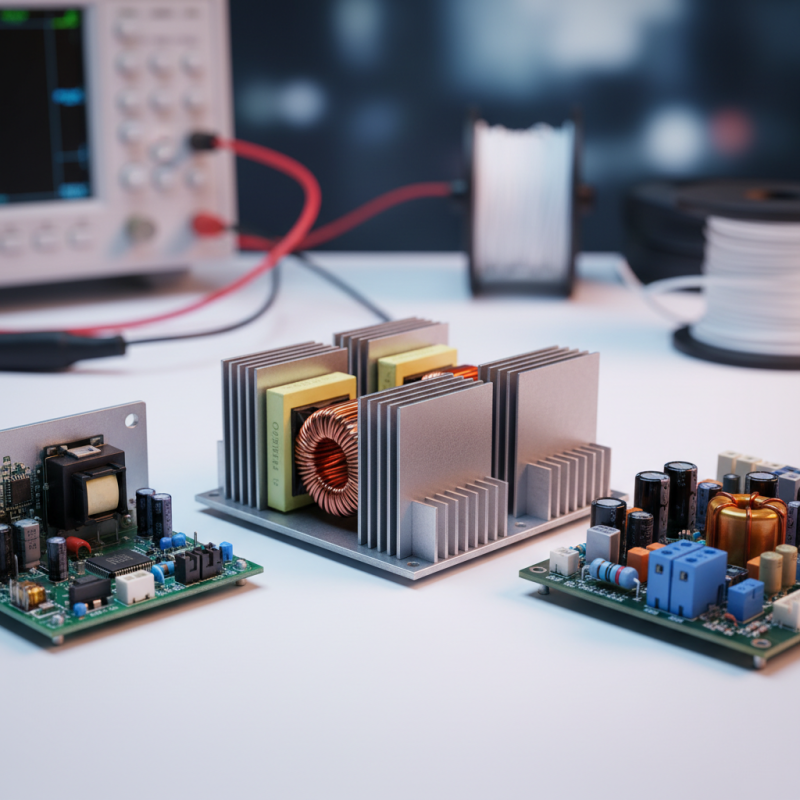
Switching power supplies are essential in various applications. They convert electrical power efficiently, making them ideal for modern electronics. There are several types to consider, each with unique characteristics.
One common type is the flyback converter. It’s often used in low-power applications. This design is simple and cost-effective. However, it may not handle high demand well. Another type is the buck converter. This works well for stepping down voltage. It’s efficient and compact, but can be complex to design.
When choosing a power supply, consider your specific needs. Assess voltage levels, current requirements, and efficiency ratings. Ensure the design can handle peak loads. Test units under different conditions for reliability. Remember, an inefficient power supply can lead to increased energy costs.
Tips: Always prioritize cooling in your design. Poor heat management can lead to failures. Use proper filters to minimize noise. This is crucial for sensitive applications.
| Type | Efficiency (%) | Output Voltage (V) | Typical Applications |
|---|---|---|---|
| Flyback Converter | 70-90 | 3.3 - 48 | Low-power applications, chargers |
| Forward Converter | 80-95 | 5 - 40 | Industrial power supplies |
| Half-Bridge Converter | 90-95 | 12 - 200 | Mid to high power applications |
| Full-Bridge Converter | 90-98 | 24 - 1000 | High power applications, servers |
| Boost Converter | 85-95 | 5 - 60 | Battery-powered devices |
| Buck Converter | 90-98 | 1 - 60 | Power management, LED drivers |
When selecting a switching power supply, several key factors come into play. Efficiency is paramount. Studies show that a power supply with at least 80% efficiency can significantly reduce energy losses. This efficiency not only curtails operational costs but also minimizes heat generation. Excess heat can shorten the lifespan of the components, leading to potentially costly issues down the line.
Another crucial aspect to consider is the load capacity. Overloading a power supply can lead to malfunctions. Reports indicate that over 20% of users miscalculate the load requirements for their devices. This oversight can result in inadequate power delivery. Ensuring your power supply meets current and future demands is essential.
Finally, don't forget about noise levels. A power supply can introduce electrical noise into your system. This interference can degrade performance, especially in sensitive applications. It's worth noting that some users overlook this factor, leading to operational issues. Monitoring these details ensures a more reliable and efficient setup.
When choosing a power supply, consider its application. Different types of switching power supplies fit various needs. For example, a buck converter is highly efficient for battery-powered devices. It steps down voltage while minimizing energy loss. This makes it ideal for portable gadgets.
In contrast, an isolated power supply is often used in industrial settings. It provides electrical separation for safety and stability. With multiple output voltages, it can power complex systems. But it can be more costly and harder to design. Reflecting on these aspects is crucial. You must weigh cost against performance.
Flexible power supplies like those with adjustable outputs cater to diverse needs. They allow tuning parameters based on requirements. However, they might introduce design complexity. Choosing the right type isn’t always straightforward. It requires a balance between efficiency, safety, and cost.
Switching power supplies come in various types, each with unique advantages and disadvantages. One popular type is the buck converter. It efficiently steps down voltage. They are compact and deliver high efficiency. However, buck converters can't step up voltage, limiting their use.
Another type is the boost converter. It can step up voltage, making it versatile. Boost converters work well in battery-powered applications. On the flip side, they tend to have lower efficiency than buck converters, especially at high outputs. Noise generation is also a notable issue, which can complicate designs.
When choosing a power supply, consider your specific needs. Think about size, weight, and efficiency. Tips: Always check the thermal performance. Ensure your power supply can handle the heat generated during operation.
Additionally, consider your budget. Different types can vary significantly in cost. A more efficient supply might be pricier but can save money long-term. Don't overlook the importance of reviewing user experiences and feedback. They can highlight real-world advantages and downsides you might not see in specifications.
Maintaining a switching power supply is crucial for long-term performance. Regular cleaning is essential. Dust accumulation can cause overheating. So, it is important to ensure that the cooling fans and vents remain unobstructed. A clean power supply runs efficiently.
Periodic inspections are necessary. Check for any signs of wear or damage. Listen for unusual noises during operation. Act quickly if components appear faulty. Ignoring these signs can lead to bigger issues. Temperature monitoring plays a key role as well. Excess heat can shorten lifespan significantly.
Capacitors are often the weak link in power supplies. Consider replacing them after several years. They can degrade over time. Using quality components initially helps prevent premature failure. Maintaining proper input voltages is also vital. Surges can damage sensitive circuitry. Be cautious about environmental factors too. High humidity and extreme temperatures can create problems.