
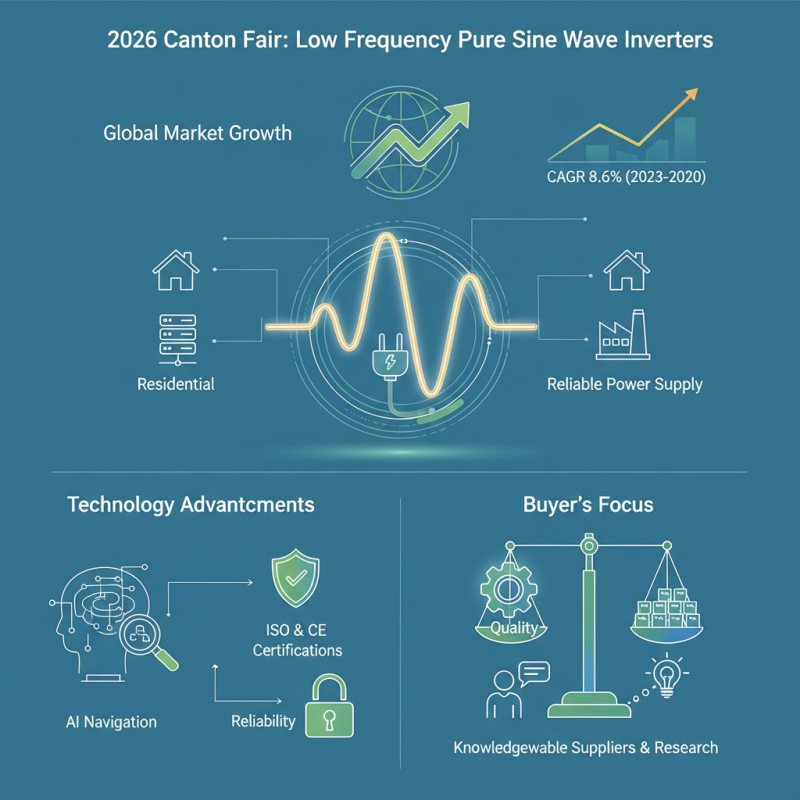
The 2026 Canton Fair promises to be a significant event for the renewable energy sector, especially for Low Frequency Pure Sine Wave Inverters. This inverter type is crucial for applications that require stable and reliable power supply. According to industry reports, the global inverter market is projected to grow at a CAGR of 8.6% from 2023 to 2030. This growth indicates a rising demand for high-quality inverters.
During this year's fair, advancements in technology will be showcased. The integration of AI for intelligent navigation will help buyers efficiently locate suppliers with necessary certifications like ISO and CE. However, buyers must focus on companies that not only meet these certifications but also offer reliable products. Low Frequency Pure Sine Wave Inverters have varied applications, from residential to industrial use.
Despite technological advancements, some manufacturers still struggle with product reliability. Buyers need to conduct thorough research before making decisions. The need for quality over quantity is apparent. Engaging with knowledgeable suppliers can help navigate the diverse products at the fair.
Low frequency pure sine wave inverters have gained popularity at trade shows like the Canton Fair. These devices are essential for various applications, providing clean and stable power. They are particularly useful for home appliances and sensitive electronics. Users appreciate their ability to convert DC power into high-quality AC power.
Many products in this category claim efficiency. However, some may fall short of expectations. It's crucial to check the specifications carefully. Not all inverters are created equal. Some may have limited output power or performance issues. Therefore, reviews and comparisons can be beneficial.
Tip: When selecting an inverter, consider the total wattage required by your devices. Always choose a model with higher capacity than you think you need.
Another aspect to consider is the inverter's cooling system. Inverters can overheat, affecting performance. Models with high-quality cooling features tend to be more reliable. However, they might be pricier. Be sure to weigh the cost against potential issues.
Tip: Look for inverters with good warranties. A solid warranty often reflects reliability. Always ask about customer service availability too. You may need assistance later.
When exploring low frequency pure sine wave inverters, a few key features stand out. One is their efficiency. High efficiency reduces energy loss. This can result in lower electricity bills.
Another element to consider is waveform quality. A pure sine wave offers clean power. It is essential for sensitive electronics. Look for an inverter that effectively maintains this waveform. Pay attention to the total harmonic distortion (THD). Lower THD means better performance.
**Tip:** Always check the inverter's surge capacity. This is crucial for starting equipment. It should handle short bursts of energy.
Battery compatibility is also important. Ensure the inverter works well with your battery type. This can enhance overall system reliability. Some inverters feature advanced battery management systems. But not all do, which requires careful consideration.
**Tip:** Check user reviews. They often highlight potential issues. Real-world experiences can reveal valuable insights.
Portability is another factor. Some inverters are bulky, while others are compact. Think about where you plan to use it. Weight may be an issue if you need mobility. Lastly, consider the cooling system. Proper cooling prevents damage during operation. This can be overlooked, but it is vital for longevity.
The 2026 Canton Fair is set to showcase an incredible array of low frequency pure sine wave inverters. These devices are essential for providing reliable, clean power to sensitive electronics. Visitors will find numerous brands displaying innovative technology. The focus is on efficiency and durability, aimed at both commercial and residential markets.
Several top brands will be present. They highlight their latest models, which promise enhanced performance. Attendees can expect detailed demonstrations. Users appreciate inverters that minimize noise and maximize output. However, some products may require further refinement. Not all inverters provide the expected efficiency, and feedback is crucial for improvement.
Curiosity will be high. People seek to learn about different technologies. The Canton Fair serves as a platform for discovering trends. Expect discussions on sustainability and energy solutions. The presence of industry experts will foster engagement. Together, they will address challenges and advancements in inverter technology.
When evaluating low-frequency pure sine wave inverters, performance and efficiency are crucial. A recent study from the International Renewable Energy Agency (IRENA) highlights that inverter efficiency typically ranges from 85% to 95%. However, many models fall short of these ideals in real-world conditions. Even small losses in efficiency can significantly impact overall energy savings, especially in large installations.
Inverters that consistently achieve higher efficiency tend to utilize advanced technologies, like better cooling systems and optimized power electronics. Reports indicate that those with an efficiency rating of 90% or higher can deliver substantial energy savings over time. Yet, it's important to note that efficiency can vary in different environments. Factors like temperature fluctuations and load variations may affect performance, making it essential for users to consider their specific needs.
Researchers from the Energy Storage Association emphasize the significance of durability in inverter performance. They found that inverters with longer lifespans offer better returns on investment. However, user experiences often reveal unexpected failures or underperformance after a few years of use. This raises questions about long-term reliability and the importance of user reviews in selecting the best products.
| Model | Power Output (W) | Efficiency (%) | Weight (kg) | Price (USD) |
|---|---|---|---|---|
| Model A | 1000 | 90 | 8.5 | 250 |
| Model B | 1500 | 92 | 9.2 | 300 |
| Model C | 2000 | 88 | 11.0 | 450 |
| Model D | 2500 | 91 | 12.5 | 600 |
The market for sine wave inverters is evolving rapidly. Innovations are focusing on efficiency and compact designs. Manufacturers are exploring materials that enhance performance and durability. The demand for cleaner energy solutions is driving these changes. Consumers want inverters that save energy and reduce waste.
At the upcoming 2026 Canton Fair, expect to see new features. Some inverters will integrate smart technology. This allows users to monitor energy usage remotely. Others may offer faster charging capabilities. However, some designs may still struggle with heat management. This can impact efficiency, especially during heavy use.
Environmental sustainability is another focus. Many products are shifting toward eco-friendly materials. There is a growing need for inverters that minimize carbon footprints. Yet, balancing cost and innovation is a challenge. Businesses face pressure to keep prices competitive while developing advanced features.