
Top 10 Best 48V Electric Scooters for Adults

Choosing a 48v Electric Scooter involves more than comparing top speeds. Voltage can hint at a scooter’s power, but it does not tell the whole story. Battery capacity, motor design, rider weight, terrain, and weather all affect practical range. A long advertised range may shrink on steep streets or during frequent stops. Real use is less tidy than a specification sheet.

This guide introduces ten adult scooters and highlights details worth checking before you buy. We consider battery capacity, braking systems, tire type, rider limits, charging time, and available manufacturer support. These specifications help frame a comparison, but they are not a promise of identical performance for every rider. Look for clear product documentation, warranty terms, and replacement-part information. Small details matter.

There is no perfect scooter for every commute. A heavy model may feel reassuring on a rough road, yet become awkward to carry upstairs. A lighter one may be easier to store, though its range or ride comfort could be more limited. We have not treated listed figures as guaranteed real-world results; conditions and testing methods vary. That distinction is easy to miss. Use the selections as a starting point, then match each model’s verified specifications to your route, storage space, and daily needs. Some trade-offs remain, and that is worth admitting.
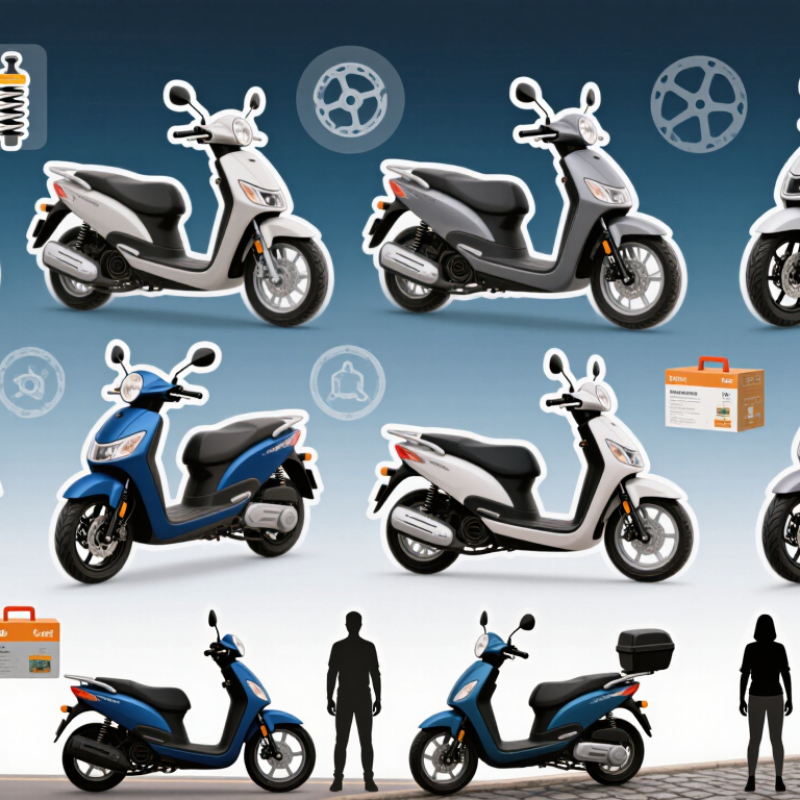
Top 10 Best 48V Electric Scooters for Adults

How 48V Electric Scooter Systems Work

A 48V scooter battery is not always exactly 48 volts. Most lithium-ion packs use 13 cell groups in series, giving about 46.8V nominal when cells are rated at 3.6V. Fully charged, the pack can reach roughly 54.6V. That difference matters: the controller, display, and charger must match the battery’s voltage range. A battery marked 15Ah stores about 720Wh at nominal voltage, using the simple formula volts × amp-hours. In practice, usable energy is lower because of heat, load, and protective cutoffs.

The controller regulates battery power and sends timed electrical pulses to the motor. For example, a 1,000W motor draws about 21A at 48V under ideal conditions; real current varies with hills, acceleration, and system losses. A battery management system monitors cell voltage and temperature, but it cannot make a mismatched charger safe. The U.S. Department of Energy’s 2023 light-duty vehicle battery assessment reported pack costs of $139 per kilowatt-hour, about 90% below 2008 levels. Those figures are not scooter-specific, but they show how battery technology has changed.

Tips: Check the battery’s nominal voltage, amp-hours, and charger output before buying. After a steep climb, feel for unusual warmth, not just reduced range. One caveat: advertised range is often optimistic; rider weight, tire pressure, and cold weather can shift it noticeably.

Key Features to Compare Before Choosing a Scooter

For a 48V electric scooter, compare more than the voltage printed on its specifications. Check the battery’s capacity in amp-hours and watt-hours; these figures help explain how much energy it stores. Claimed range can vary with rider weight, hills, temperature, and speed. A short commute on flat roads is not the same as a steep, windy route. Treat advertised range as an estimate, not a promise.

Motor output, brakes, tires, and suspension all affect the ride. Look for clear information about continuous power, not just peak power. Disc brakes can offer dependable stopping, but they still need inspection and adjustment. Wider pneumatic tires may soften rough pavement, while adding puncture risk. Check the scooter’s weight limit, folded dimensions, charging time, and water-resistance rating. Some specs look impressive on paper; real comfort is harder to judge without a test ride.

Tips: If possible, ride over a familiar patch of uneven pavement and test the brakes at low speed. Check that the handlebar feels steady and the display stays readable in daylight. Measure your storage space before buying. One detail is easy to overlook: a heavy scooter can be awkward to carry upstairs, even when it folds neatly.

Top 10 48V Electric Scooters for Adult Riders

Choosing among the top 10 48V electric scooters for adult riders takes more than comparing voltage. A 48V battery describes the electrical system, not the scooter’s real-world range or hill-climbing ability. Battery capacity, motor output, controller settings, rider weight, and terrain all affect performance. Check the manufacturer’s stated range, then treat it as an estimate. Cold weather and frequent stops can reduce it.

Look closely at the parts you use every ride. Responsive brakes, grippy tires, bright lights, and a stable deck matter on uneven pavement. A clear display and comfortable handlebar position also help during daily commutes. Small details matter. Check the scooter’s weight and folding mechanism if you need to carry it upstairs or store it under a desk. Confirm that replacement tires and service support are reasonably accessible.

I would not rank a scooter by voltage alone; that shortcut is tempting, but incomplete. Compare the rated load with your own weight, especially if you carry a backpack. Review charging time and battery-removal options before buying. A larger battery may add useful range, but it can also add weight. Test the brakes and steering in a safe, open area when possible. Even a well-equipped scooter can feel awkward on rough roads, and that part is easy to overlook.

Top 10 Best 48V Electric Scooters for Adults — Battery Energy Reference

A 48V system’s nominal battery energy depends on its amp-hour (Ah) capacity. The chart compares ten capacity examples; watt-hours are calculated as 48V × Ah. These are not ranked scooter models or product-specific specifications.

Battery Range, Charging Time, and Riding Performance

A 48V label tells only part of the story. Battery capacity matters just as much: a 48V, 15Ah pack stores about 720Wh. Compare watt-hours, not voltage alone, when judging the ten scooters’ likely range. Real range varies. Rider weight, hills, cold weather, tire pressure, and repeated hard acceleration all draw extra power. A maker’s maximum-range figure is best treated as an optimistic estimate, not a daily promise.

Charging time depends on both pack size and charger output. A 15Ah battery paired with a 2A charger needs at least 7.5 hours by simple division; charging losses and the final slow phase can add time. Check whether the charger specification is stated in amps, and allow overnight charging when the pack is nearly empty. Small detail, big difference. A visible battery indicator can also be imprecise, so avoid planning a long ride around one bar.

NACTO’s 2023 Shared Micromobility Report recorded 133 million shared micromobility trips in the United States. That scale shows why practical range and dependable charging matter, though shared-trip data cannot predict one person’s private scooter range. Compare claimed range with battery watt-hours, then look for independent test conditions. A short test ride may feel brisk on flat pavement but reveal little about steep streets or late-ride battery sag. I would trust a measured route more; unfortunately, comparable public tests remain limited.

Safety, Maintenance, and Long-Term Ownership Costs

A 48V electric scooter may climb more confidently than a lower-voltage model, but power does not replace careful riding. Check both brakes before each trip, especially after rain or storage. Look for loose bolts, cracked tires, and a headlight that works in dim garages. A helmet and visible clothing help, but stopping distance still depends on speed, surface, and rider weight. Leave room to slow down.

Tips: Keep a small pressure gauge and basic tool kit at home. Check tire pressure weekly, and inspect the brake pads every few weeks. If the scooter pulls to one side or makes a new grinding sound, stop riding and investigate rather than hoping it disappears.

Long-term costs include more than the purchase price. Tires, brake parts, and occasional cable adjustments wear with use; rough roads can speed that up. Charging costs are usually modest, but battery replacement can be a major expense as capacity declines over time. Avoid leaving the battery fully charged or empty for long periods, and follow the manual’s storage guidance. Batteries age. Track repairs and charging habits in a simple note on your phone; it can reveal patterns, though I would not treat one month’s figures as a reliable forecast. A small maintenance reserve makes ownership less stressful.

Top 10 Best 48V Electric Scooters for Adults — Safety, Maintenance, and Long-Term Ownership Costs

A practical comparison of common 48V adult-scooter configurations. Profiles are ranked by general-purpose suitability, not by independent testing of specific products.

Rank Configuration Typical Battery Typical Real-World Range Typical Speed Capability Safety and Comfort Features to Look For Routine Maintenance Estimated Annual Wear Costs Estimated Cost per Full Charge
1 Balanced commuter 48V, 15–20Ah (720–960Wh) About 20–35 miles About 20–28 mph Front and rear brakes, bright lights, reflectors, 10-inch tires, and a stable deck Check tire pressure, brakes, lights, and fasteners regularly $80–$180 About $0.13–$0.17
2 Long-range commuter 48V, 20–30Ah (960–1,440Wh) About 30–50 miles About 20–28 mph Dual braking, battery protection, visible lighting, and tires suited to the route As above; inspect the larger battery’s casing and connector condition $90–$220 About $0.17–$0.26
3 Lightweight urban commuter 48V, 10–15Ah (480–720Wh) About 12–25 miles About 18–25 mph Predictable braking, a secure folding latch, lights, and a manageable carrying weight Check the folding mechanism and latch for play; maintain tires and brakes $60–$150 About $0.09–$0.13
4 Comfort-focused city scooter 48V, 15–20Ah (720–960Wh) About 18–32 miles About 20–28 mph Suspension, wider tires, dual brakes, and a well-lit display and control layout Inspect suspension pivots, tire condition, brakes, and steering for looseness $90–$200 About $0.13–$0.17
5 Wet-weather commuter 48V, 15–20Ah (720–960Wh) About 18–30 miles About 18–25 mph Effective lights, grippy tires, fenders, and a clearly stated water-resistance rating Dry the scooter after wet rides; check brakes, connectors, and corrosion-prone areas $90–$210 About $0.13–$0.17
6 Hilly-route commuter 48V, 15–25Ah (720–1,200Wh) About 15–30 miles About 20–28 mph Strong braking, a motor and controller rated for sustained use, and tires with reliable grip Expect more frequent brake and tire checks on steep or demanding routes $100–$240 About $0.13–$0.21
7 Rough-pavement commuter 48V, 15–25Ah (720–1,200Wh) About 16–30 miles About 18–25 mph Suspension, pneumatic tires, sturdy stem construction, and front and rear braking Inspect tires, suspension, stem, and fasteners often; rough surfaces increase wear $100–$250 About $0.13–$0.21
8 Seated commuter 48V, 15–25Ah (720–1,200Wh) About 18–35 miles About 18–25 mph Secure seat and mounting hardware, stable handling, lights, and dependable brakes Check seat hardware and frame joints in addition to routine tire and brake checks $90–$220 About $0.13–$21
9 Higher-power dual-motor style 48V, 20–30Ah (960–1,440Wh) About 18–35 miles Often capable of 25 mph or more Strong, well-modulated brakes, quality tires, lighting, and a stable frame Higher loads can increase tire, brake, and drivetrain wear; inspect frequently $120–$300 About $0.17–$26
10 Entry-level short-trip scooter 48V, 10–15Ah (480–720Wh) About 10–22 miles About 18–25 mph At least one dependable brake system, working lights, reflectors, and a secure stem Keep tires inflated and check brake adjustment and folding hardware $60–$160 About $0.09–$0.13

Cost and range notes: Figures are indicative estimates, not guarantees or quotes for a particular scooter. Real-world range depends on rider and cargo weight, speed, hills, temperature, tire pressure, and battery condition. Charge-cost estimates assume electricity at $0.16/kWh and about 90% charging efficiency; actual rates vary. Annual wear-cost estimates cover typical consumables and minor routine upkeep, not labor, accident damage, or battery replacement. A battery’s nominal energy in watt-hours is approximately volts multiplied by amp-hours. Check local laws and the scooter’s actual specifications before buying or riding; speed limits and equipment requirements vary by location.

We are crowdfunding!
Privacy Overview

This website uses cookies so that we can provide you with the best user experience possible. Cookie information is stored in your browser and performs functions such as recognising you when you return to our website and helping our team to understand which sections of the website you find most interesting and useful.

Find out more about Kitepower's privacy policy