


Choosing the 2026 best printed circuit board assembly suppliers requires more than comparing factory photographs and quoted prices. Buyers need evidence of process control, engineering depth, delivery stability, and responsible sourcing. A supplier may advertise advanced SMT lines, yet still struggle with traceability or low-volume prototypes. Details matter.
IPC’s Global Sentiment of the Electronics Industry reports continue to monitor uneven demand, material pressure, and changing production expectations across electronics manufacturing. The Semiconductor Industry Association also reported strong long-term semiconductor growth, increasing pressure on assembly partners to manage fine-pitch packages, thermal demands, and supply-chain volatility. Market forecasts from Grand View Research similarly indicate continued expansion in electronics manufacturing and PCB-related applications. However, forecasts vary widely. They should guide research, not replace it.
Hayao Nakahara, a veteran PCB industry consultant, has described the PCB sector as “a barometer of the electronics industry.” That observation remains useful in 2026. Assembly performance often exposes wider problems first. A delayed component can stop a complete production line. A weak solder joint can return months later as a field failure. The strongest suppliers therefore combine automated optical inspection, X-ray inspection, documented corrective action, and trained technicians. Certifications help. They are not proof of excellence alone.
This guide evaluates leading suppliers through measurable capabilities, including DFM support, prototype responsiveness, production scalability, testing coverage, geographic reach, and customer communication. No ranking is perfect. Supplier strengths change by region, product complexity, and order volume. That is the uncomfortable part. A global contract manufacturer may not suit a medical startup, while a smaller specialist may lack capacity during sudden demand. Real supplier selection requires careful verification.
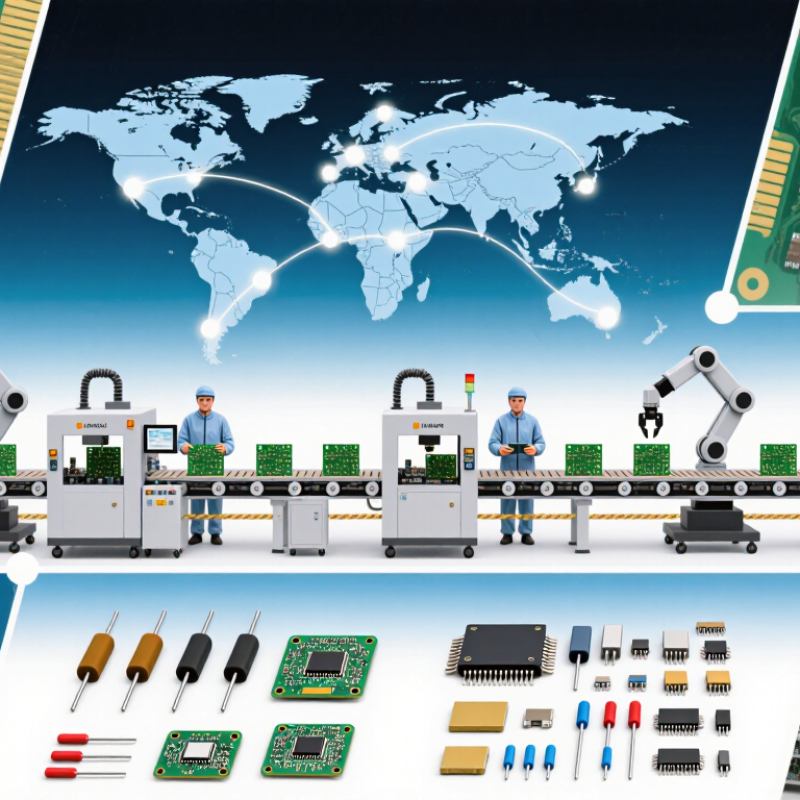
Printed circuit board assembly suppliers provide far more than soldering components onto a board. Reliable suppliers review Gerber files, bills of materials, and assembly drawings before production begins. Their engineers check component spacing, pad sizes, polarity marks, and thermal requirements. This design-for-manufacturing review can prevent expensive revisions later. Details matter.
A capable supplier supports prototype builds, pilot runs, and larger production orders. Services may include surface-mount assembly, through-hole installation, selective soldering, and cable integration. Many suppliers also source components, verify packaging, and manage approved substitutions when parts become unavailable. However, substitution decisions need written approval. A cheaper component may change electrical performance or product reliability.
Quality control should be visible and measurable. Suppliers can provide automated optical inspection, X-ray inspection, in-circuit testing, and functional testing. They should maintain lot numbers, inspection records, and production traceability. Clear communication about defects is equally important. Small errors grow. A dependable partner reports failures instead of hiding them. Packaging, moisture protection, labeling, and shipment scheduling also belong in the service scope. Some suppliers offer engineering feedback during production, though their recommendations may not always fit the original design. That gap matters. Buyers should compare response times, testing depth, documentation quality, and change-control procedures before choosing a partner for 2026.
| Service Dimension | What Suppliers Commonly Provide | Typical Deliverables | Relevant Standards or Practices | Typical Buyer Benefit |
|---|---|---|---|---|
| Design for Manufacturing | Engineering review of the PCB layout, component placement, solder-mask openings, clearances, panelization, and assembly risks before production. | Design review report, manufacturability recommendations, revised production files, and clarification questions. | DFMDFAPanelization | Fewer production interruptions, reduced rework, and better first-pass yield. |
| PCB Fabrication Coordination | Manufacturing or sourcing of bare circuit boards according to layer count, material, copper weight, surface finish, and dimensional requirements. | Fabricated PCBs, fabrication drawings, material declarations, and electrical test records when specified. | FR-4Rigid PCBFlexible PCBRigid-Flex | One supplier can coordinate the bare-board and assembly stages. |
| Component Sourcing | Procurement of electronic components from authorized distribution channels, franchised sources, or approved independent channels according to the buyer’s risk policy. | Approved bill of materials, purchase records, lot information, certificates of conformity, and traceability data. | BOM ReviewLifecycle CheckCounterfeit Screening | Lower procurement workload and improved visibility into component availability and risk. |
| Surface-Mount Assembly | Automated placement of surface-mount devices using solder-paste printing, pick-and-place equipment, and reflow soldering. | Assembled SMT boards, placement data, process records, and inspection results. | SMTReflowLead-Free Options | Consistent placement accuracy and efficient production for medium- to high-volume builds. |
| Through-Hole Assembly | Installation and soldering of leaded components using manual, selective, or wave-soldering processes, depending on board design and volume. | Through-hole assembled boards, soldering records, and workmanship inspection results. | THTSelective SolderingWave Soldering | Supports connectors, transformers, power components, and mechanically stressed parts. |
| Prototype Assembly | Small-batch assembly for design verification, engineering testing, firmware development, and pre-production evaluation. | Prototype units, build feedback, assembly photographs, inspection reports, and issue lists. | Low VolumeQuick TurnaroundEngineering Support | Enables earlier design validation before committing to larger production quantities. |
| High-Volume Production | Repeatable production planning, line balancing, material scheduling, process control, and batch-level documentation. | Production batches, manufacturing schedules, yield reports, and shipment documentation. | Process ControlBatch TraceabilityCapacity Planning | Improves supply continuity and helps control unit cost at scale. |
| Automated Optical Inspection | Camera-based inspection of solder paste, component presence, polarity, position, and visible solder-joint conditions. | AOI images, defect classifications, inspection reports, and repair records where applicable. | AOISolder InspectionPolarity Check | Detects many assembly defects earlier than final functional testing alone. |
| X-Ray Inspection | Non-destructive inspection of hidden solder joints and internal structures, including many bottom-terminated and array-based packages. | X-ray images, defect analysis, and inspection records for selected or full-board coverage. | BGAQFNVoiding Analysis | Improves visibility into defects that cannot be confirmed by conventional optical inspection. |
| Electrical Testing | Testing of continuity, isolation, shorts, opens, and selected electrical characteristics using fixtures or automated test equipment. | Test fixtures, test procedures, pass/fail records, and test coverage information. | Flying ProbeICTContinuity Test | Identifies manufacturing-related electrical faults before shipment. |
| Functional Testing | Verification that the assembled product operates according to customer-defined electrical, firmware, and system requirements. | Test procedures, programmed firmware, functional test results, and failure analysis records. | FCTFirmware LoadingSystem Simulation | Provides stronger assurance that the finished assembly performs its intended function. |
| Conformal Coating | Application of a protective coating to improve resistance against moisture, dust, chemicals, and certain environmental conditions. | Coated assemblies, masking specifications, coating inspection records, and curing information. | AcrylicSiliconePolyurethane | Supports reliable operation in demanding environmental applications. |
| Box Build and Integration | Assembly of enclosures, cables, displays, power supplies, mechanical parts, and PCBA subassemblies into a finished product or system. | Integrated units, cable assemblies, labeling, packaging, and final inspection records. | Box BuildCable AssemblySystem Integration | Reduces the number of separate manufacturing and integration suppliers. |
| Quality Management | Documented procedures for incoming inspection, process monitoring, nonconformance handling, corrective action, and final release. | Inspection plans, control plans, nonconformance reports, corrective-action records, and audit documentation. | ISO 9001IPC WorkmanshipCAPA | Creates a repeatable quality framework and supports customer audits. |
| Regulatory and Material Compliance | Support for material declarations, restricted-substance requirements, product documentation, and customer-specific compliance requests. | Declarations of conformity, material data, supplier certificates, and compliance files. | RoHSREACHConflict Minerals | Helps simplify compliance reviews and market-entry documentation. |
| Supply Chain Traceability | Tracking of component lots, PCB batches, production dates, operators or machines, inspection results, and shipment records. | Serialized or lot-level history, material records, process logs, and shipment traceability. | Lot ControlSerializationDigital Records | Supports warranty analysis, recalls, root-cause investigations, and regulated production. |
| After-Sales Support | Technical communication, failure analysis, repair or rework coordination, engineering change support, and replacement-unit management. | Return analysis, corrective-action plans, repair reports, and engineering change records. | RMA SupportRoot Cause AnalysisECO Support | Shortens issue-resolution time throughout the product life cycle. |